

Researched and drafted with AI assistance, fact-checked by our editorial team before publishing. We may earn a commission from purchases made through links on this page — this never influences our rankings. Full disclosure →
Quick Verdict
For most urban commuters: Google Maps or Waze on your smartphone is sufficient and costs nothing extra.
For road trippers, rural drivers, and professionals: A dedicated Garmin GPS device is worth the one-time investment for offline reliability and zero battery competition.
The honest answer: The "best" GPS system isn't about the technology — it's about your driving profile. Keep reading to find out which option fits yours in under 3 minutes.
TL;DR — Key Takeaways
- Dedicated GPS devices still hold 27.2% of the automotive navigation deployment market in 2026, despite smartphones being nearly universal.
- Garmin is now the only major standalone GPS hardware brand in the US consumer market. TomTom exited hardware but remains available as a premium navigation app.
- Google Maps offline maps expire after 30 days and cannot reroute based on live traffic. A Garmin's maps are stored permanently with no expiration.
- Over 36 months, a standalone GPS can be more cost-effective than a premium navigation app subscription — depending on your driving needs.
- Professional and fleet drivers should evaluate purpose-built hardware, not smartphone apps.
Why "My Phone Has Maps" Isn't Always Enough
Here's a fact that surprises most drivers: dedicated automotive navigation systems still hold 27.2% of the GPS deployment market in 2026, according to Fortune Business Insights. That is not a category being replaced. That is a category that still solves real problems smartphones cannot.
Smartphones are genuinely capable in most urban and suburban conditions. Google Maps and Apple Maps have improved dramatically over the past decade. For a daily commuter with reliable LTE coverage driving familiar routes, a phone is probably sufficient.
But "probably sufficient" is not the same as "always reliable." The gap between those two phrases is exactly where most real-world navigation failures happen.
The four most common failure points for smartphone navigation:
- Dead zones — no cached maps mean a frozen screen and guesswork
- Battery drain — continuous GPS, screen-on, and data use depletes most phones within 2–3 hours
- Thermal throttling — summer heat causes iPhones and Android devices to throttle CPU speed, degrading GPS accuracy
- App interruptions — calls, texts, and notifications break navigation flow at the worst moments
Neither dead zones nor battery drain are fringe cases. Both happen regularly to real drivers — especially on road trips and rural highways.
This guide answers one specific question: which navigation solution fits your driving profile in 2026? Three driver archetypes — the daily commuter, the long-distance road tripper, and the professional or fleet driver — frame every comparison below. The right answer genuinely differs between them.
If you're evaluating other vehicle purchases alongside your navigation decision, our 2026 Automotive Buyer's Guide: Parts, Tires & Insurance covers the broader landscape of car technology decisions worth making in parallel.
How the GPS Navigation Market Actually Looks in 2026
The standalone GPS hardware market has undergone dramatic consolidation — and understanding it changes how you shop.
As PCMag documented, the market contracted so significantly that the publication stopped reviewing standalone GPS devices as a category after more than 20 years of doing so. Here's where the major brands stand:
- Garmin: The only major consumer hardware brand still active in the US market
- TomTom: Exited US hardware entirely; repositioned as a software company with the TomTom Go Navigation app for iOS and Android
- Magellan: Sold its consumer GPS business to Taiwan-based MiTAC
What this means practically: if you want a dedicated GPS device, you're choosing between Garmin models — not between competing ecosystems. Fewer brands means less comparison paralysis, but Garmin effectively sets both the price ceiling and the feature floor.
TomTom's pivot deserves attention. Its Go Navigation app offers more robust offline functionality than Google Maps or Apple Maps, at a subscription price. It's a useful middle-ground option that most comparison guides overlook.
Despite hardware consolidation, the dollar value of automotive navigation continues to grow. According to Market.us, the automotive navigation market was valued at $21.7 billion in 2025 and is projected to reach $41.1 billion by 2035. The money is still flowing into this space — it's just flowing toward software, in-dash systems, and connected navigation rather than portable hardware.
Standalone GPS Devices: What They Still Do Better
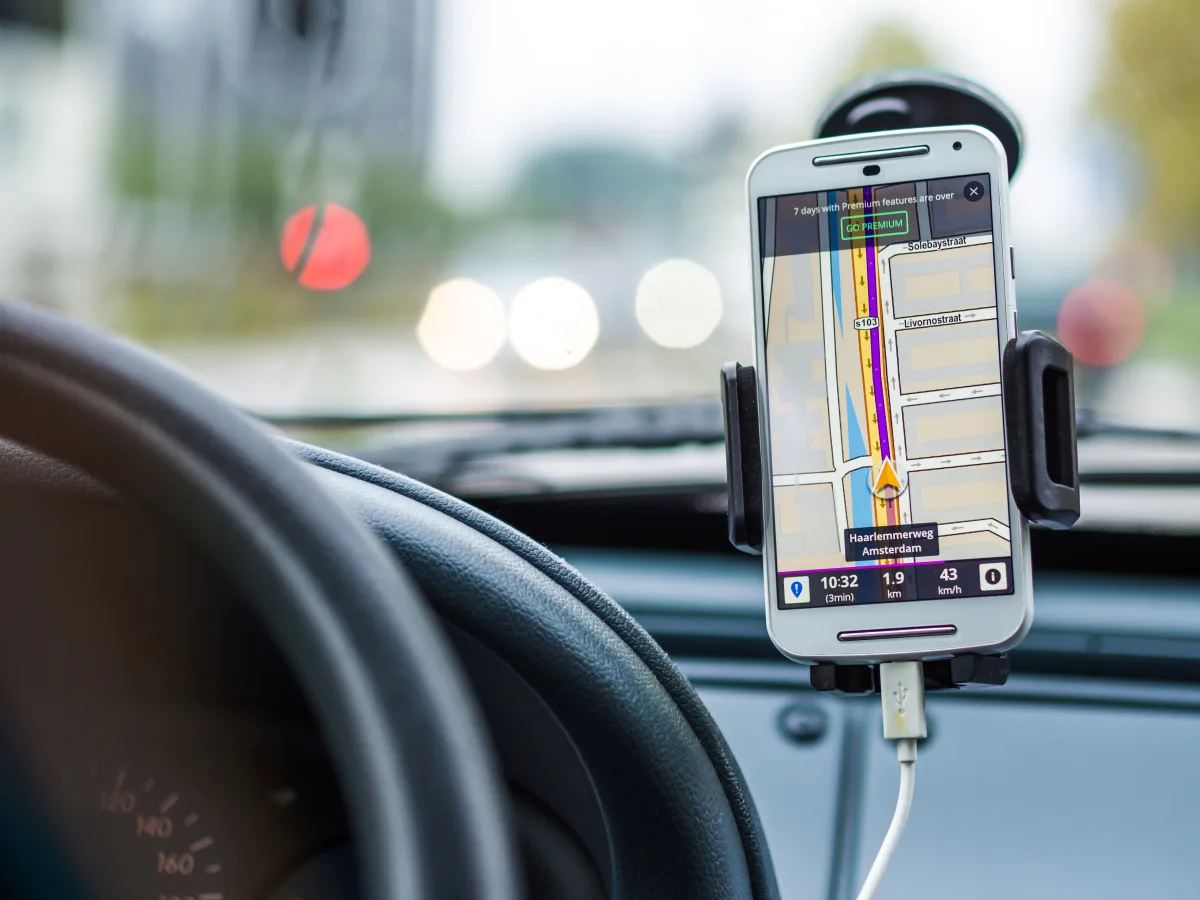
Garmin's core case for dedicated hardware — published on its own blog — is self-serving, but several arguments hold up under independent scrutiny. The most defensible come down to three things: power, permanence, and purpose-built design.
Always-On Power
A dedicated GPS connects to your vehicle's power supply. It never runs out of battery, never competes with your music app or phone calls for charging priority, and never asks you to plug in mid-route. For drivers using their phone simultaneously as a hotspot, music player, and communication device, having navigation on a separate powered device removes a genuine friction point.
Permanent Mounting
Standalone devices live in the vehicle. You mount them once, connect the power cable, and they're ready every time you start the car. No daily ritual of mounting your phone, connecting Bluetooth, opening the app, and waiting for GPS lock. For drivers who find phone-based setup annoying — or who share a vehicle with multiple users — this is a real quality-of-life advantage.
Free Lifetime Maps and Traffic
Most current Garmin models include free lifetime map updates and traffic reporting at no ongoing cost. As PCMag notes, a dedicated GPS costs significantly less than a smartphone and can be left in the vehicle permanently. The Garmin Drive 53 & Traffic — the entry-level benchmark in this category — delivers these features in a compact form factor at a one-time price well below what most people spend on a mid-range phone.
Professional Routing Logic
For commercial drivers, the hardware advantage becomes more pronounced. In 2024, Garmin launched a dedicated truck GPS navigator built specifically for commercial vehicle routing — accounting for vehicle height, weight restrictions, and hazmat rules in ways that Google Maps does not reliably handle. No smartphone app currently replicates this level of purpose-built routing logic for large vehicles.
According to Maximize Market Research, consumers are increasingly seeking offline-capable navigation, and standalone GPS devices remain more practical in specific use cases — particularly in regions where cellular infrastructure is less developed or where drivers regularly travel through low-coverage areas.
Where Standalone GPS Falls Short
Honesty requires acknowledging the weaknesses:
- No crowd-sourced real-time data at the scale Google Maps or Waze can provide
- Dynamic rerouting is slower to respond in connected conditions
- Dated UI compared to modern navigation apps
- Screen size is physically smaller than many current smartphones
- No integration with voice assistants, smart home ecosystems, or calendar apps
Smartphone Navigation: Why It Dominates and Where It Fails
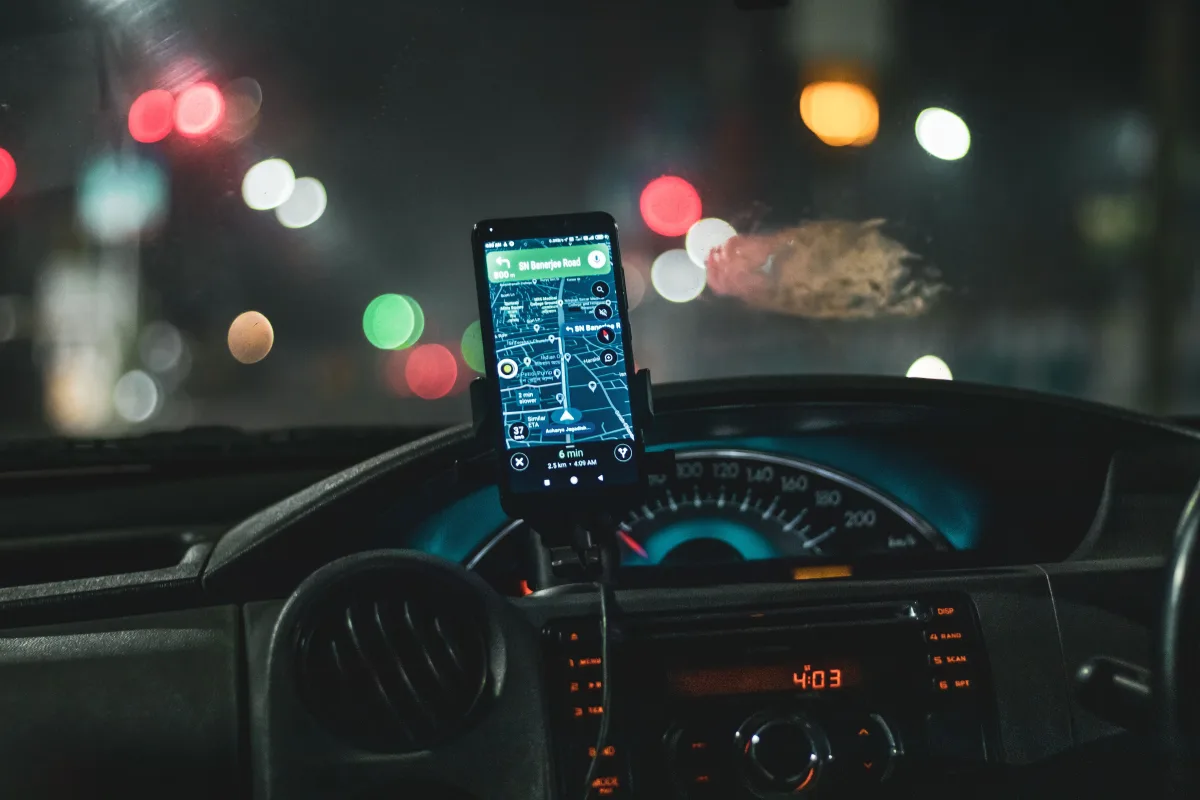
Smartphone navigation dominates by volume for simple reasons. The device is already in your pocket, the apps are free, and in connected conditions the data quality is genuinely superior to what any standalone GPS manufacturer can match independently.
Google Maps processes location data from hundreds of millions of active users simultaneously. That scale produces incident detection, ETA accuracy, and dynamic rerouting that a hardware device with its own traffic data subscription simply cannot replicate.
For the daily commuter driving familiar urban or suburban routes with reliable LTE coverage, a smartphone running Google Maps or Waze is rational and cost-effective. Waze's community-driven hazard alerts are particularly valuable for congested urban routes. Apple Maps has improved substantially and integrates tightly with the iPhone ecosystem, including CarPlay.
The zero additional hardware cost is a legitimate advantage. If you already own a quality phone mount and a car charger, your marginal cost of smartphone navigation is effectively zero.
Where Smartphone Navigation Breaks Down
Cellular dependency is the most significant structural weakness. In rural areas, mountain passes, tunnels, underground parking structures, and international travel, performance degrades or fails entirely without pre-downloaded maps.
Google Maps offline maps:
- Expire after 30 days — must be manually refreshed
- Cannot provide live traffic data or alternate route suggestions based on current conditions
- Cannot reroute dynamically once you're offline
- Require advance planning or you're navigating with stale data
Apple Maps introduced offline capability more recently, but carries similar limitations. The feature is still maturing.
Battery consumption is a persistent issue. Running GPS, screen-on navigation, and map data processing simultaneously drains a smartphone faster than almost any other use case. On a three-hour road trip, a phone at 80% charge may arrive in the red — especially in summer heat, which also causes thermal throttling that degrades GPS accuracy.
Notification interruptions are a real safety consideration. A standalone GPS does not receive calls, texts, or app alerts that break navigation focus.
TomTom Go Navigation: The Overlooked Middle Option
TomTom Go Navigation occupies an interesting middle ground. As a paid smartphone app, it offers more robust offline functionality than Google Maps or Apple Maps, with maps stored more permanently on the device. It's worth considering for drivers who want better offline performance without buying hardware — though the subscription cost should factor into any long-term comparison.
The Real Cost Comparison Over 36 Months
Most cost comparisons in this space stop at the sticker price. Here's how the numbers actually look over 36 months across three approaches:
| Navigation Option | Upfront Cost | Ongoing Cost | 36-Month Estimate |
|---|---|---|---|
| Standalone GPS (e.g., Garmin Drive 53) | ~$100–$200 | $0 (lifetime maps/traffic included) | ~$110–$220 |
| Free smartphone app (Google Maps/Waze) | $0 app + $15–$30 mount + charger | Accelerated battery wear, data usage | $45–$80 + hidden battery costs |
| Premium nav app (TomTom Go) | $0 hardware | ~$10–$20/month subscription | ~$360–$720 + mount |
The hidden costs of smartphone navigation are real but easy to underestimate. Continuous GPS use and screen-on navigation accelerates battery degradation. A battery degraded to 80% capacity may need replacement within two years of heavy navigation use — a cost that varies by device but is rarely trivial.
As Lightning GPS notes about subscription-based GPS products: monthly fees over two to three years often exceed the hardware cost itself. A navigation app subscription at $10–$20/month accumulates to $360–$720 over three years — more than the cost of a capable standalone GPS device.
The rational framework:
- Urban commuter with reliable connectivity: Free smartphone app wins on cost
- Rural or mixed-coverage driver: Standalone GPS becomes economically competitive within 18–24 months
- Shared or work vehicle: One-time hardware cost beats per-user subscription math
- International traveler: Standalone GPS with pre-loaded regional maps eliminates roaming data costs entirely
If you're also comparing electronics purchases this year, our best dash cams for 2026 guide applies similar total-cost-of-ownership thinking to another vehicle safety device.
Offline Navigation: The Feature That Matters Most — and Gets Discussed Least
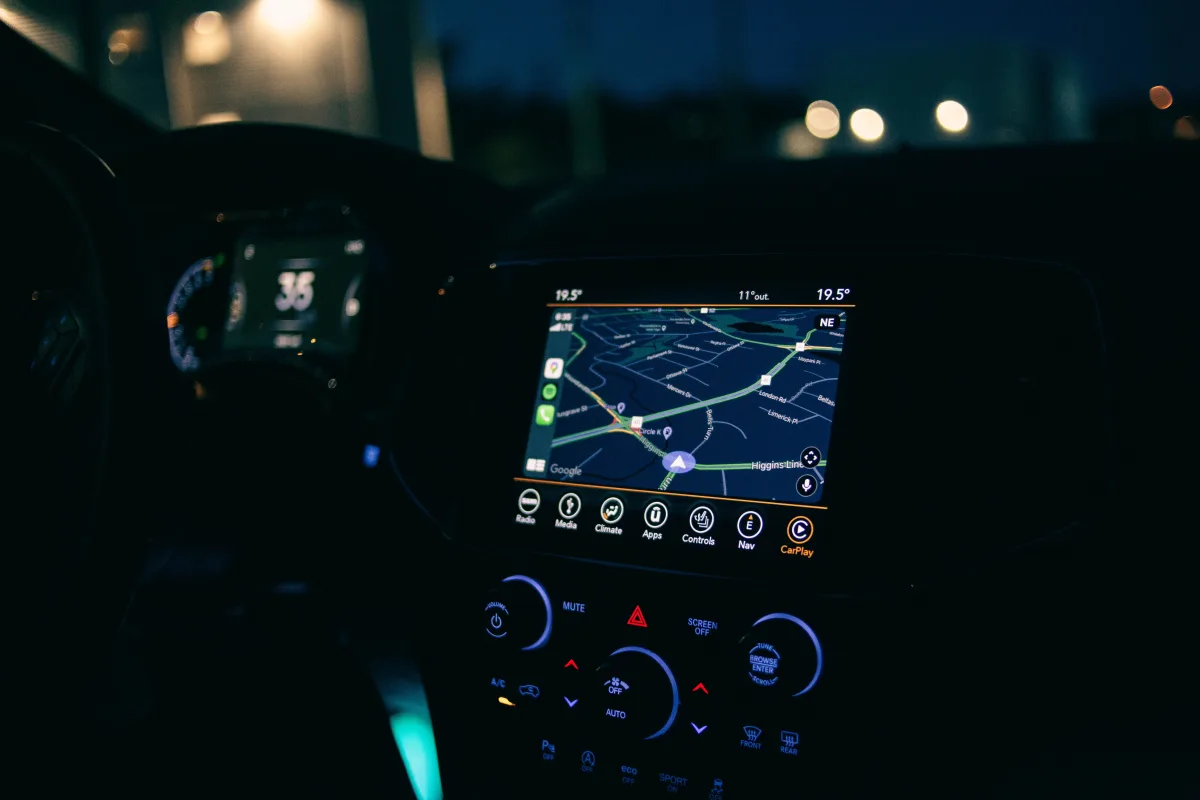
Offline navigation is not a binary feature. There's a meaningful spectrum — from fully offline with permanent on-device maps, to temporarily cached maps that expire, to apps with no offline capability at all. Most comparison guides treat it as a checkbox. It isn't.
Standalone GPS: Fully Offline, Always
Standalone GPS devices store maps permanently on internal memory or an SD card. No expiration date, no re-download requirement, no cellular signal needed at any point in the routing process.
You can drive through a national park with zero bars of service and your Garmin will route you accurately from trailhead to campsite — without hesitation, without pre-planning, and without a countdown clock.
Google Maps Offline: Better Than Nothing, But Limited
Google Maps offline maps expire after 30 days and must be manually refreshed. They cannot:
- Provide live traffic data
- Suggest alternate routes based on current conditions
- Update business information in real time
- Reroute if you miss a turn (unless you have signal)
If you downloaded offline maps two months ago and forgot to refresh, you're navigating with stale data — and may not realize it until you're already deep into a dead zone.
Apple Maps Offline: Improving, Still Maturing
Apple Maps introduced offline capability more recently than Google Maps. It's a genuine improvement, but carries similar constraints and the feature is still catching up to both Google's free tier and TomTom's paid offline experience.
For road trippers, rural drivers, and international travelers, offline navigation quality is the single most important differentiator. Maximize Market Research identifies offline-capable navigation as a key growth driver for the portable device market — consumers are increasingly prioritizing reliable, offline-capable solutions as cellular dead zones remain a reality on US roads.
GPS Trackers vs. Navigation Devices: Know the Difference Before You Buy
A persistent source of buyer confusion is the overlap between "GPS navigation device" and "GPS tracker" in search results. They are different products that solve different problems. Buying the wrong one is an expensive mistake.
GPS navigation devices guide you from point A to point B in real time. They're driver-facing tools — you look at them while driving to know where to turn.
GPS trackers record or transmit a vehicle's location to a remote app or server. They're owner-facing tools — you check them after the fact, or receive alerts when a vehicle crosses a boundary or exceeds a speed limit. You do not use a GPS tracker for turn-by-turn navigation.
GPS Tracker Form Factors
| Form Factor | How It Works | Key Trade-Off |
|---|---|---|
| OBD-port plug-in | Plugs into OBD-II port under the dash | Only active when ignition is on — can't track a towed vehicle |
| Portable battery-powered | Hidden anywhere in vehicle | Requires periodic recharging |
| Hardwired | Permanently connected to vehicle electrical system | Most reliable; requires professional installation |
Common use cases for GPS trackers: teen driver monitoring, theft recovery, fleet oversight, insurance verification. None of these are served by a navigation device.
As Lightning GPS recommends: define your primary goal first — theft recovery, teen monitoring, fleet oversight, or navigation — because the goal determines the product category, and the category determines everything else.
If you're researching fleet or driver safety tools alongside navigation, our guide to best auto tools for DIY mechanics 2026 covers the broader automotive accessories landscape.
Which Option Fits Which Driver: A Decision Framework
Rather than declare a universal winner, here's how to match the technology to your actual driving profile.
The Daily Commuter
Best choice: Smartphone (Google Maps or Waze)
If you drive familiar urban or suburban routes with reliable LTE coverage, a smartphone is almost certainly sufficient. The real-time traffic data and crowd-sourced incident reporting are genuinely better than what a standalone GPS provides in connected conditions. Invest in a quality phone mount and a reliable car charger — your total setup cost is under $50, and your navigation is free.
The Long-Distance Road Tripper
Best choice: Standalone GPS (Garmin Drive series)
Offline reliability becomes critical once your routes regularly pass through rural areas, national parks, mountain highways, or any region with inconsistent cellular coverage. A Garmin with permanently stored maps handles this at a one-time cost with no subscription required.
Alternatively: download Google Maps offline regions for every area you plan to drive through at least one week before departure — and set a calendar reminder to refresh them if your trip exceeds 30 days. This takes discipline and planning that many drivers don't maintain consistently.
For road trip prep more broadly, our how to buy a used car online in 2026 guide includes a section on essential tech accessories worth budgeting for before a long drive.
The Professional or Fleet Driver
Best choice: Purpose-built GPS hardware + separate fleet tracker
Truck and commercial drivers need routing that accounts for vehicle dimensions, weight limits, bridge clearances, and hazmat restrictions. Garmin's dedicated truck GPS handles these constraints in ways no smartphone app reliably replicates.
Fleet managers need GPS trackers — not navigation devices. Rideshare and delivery drivers who use their phone heavily for other work functions benefit from a separate navigation device that doesn't compete for battery or processing resources.
The International Traveler
Best choice: Standalone GPS with pre-loaded regional maps, or TomTom Go Navigation
A standalone GPS with regional maps or a premium offline-capable app like TomTom Go Navigation is the safest choice. Relying on Google Maps with foreign roaming data introduces cost and reliability variables that a device with on-board maps eliminates entirely.
What to Look for When Buying a Standalone GPS in 2026
If you've decided a dedicated device is right for you, here are the key specs to evaluate — not just the headline features:
- Map coverage and update frequency: Garmin's free lifetime map updates are genuine, but verify that your specific model includes them before purchasing
- Screen size: 5" vs. 6" vs. 7" makes a real difference in glanceability — larger is better for older drivers or anyone who dislikes squinting
- Traffic data: Look for models with free lifetime traffic (not a subscription-based add-on)
- Voice guidance quality: Text-to-speech that reads street names aloud beats "turn left" for unfamiliar territory
- Bluetooth connectivity: Allows hands-free calling and smartphone integration without replacing the navigation function
- Mount quality: The included suction-cup mount varies in quality between Garmin lines — third-party mounts are often worth the upgrade for long-term stability
For drivers building out a complete in-car tech setup, our best car audio systems and speakers 2026 guide covers the companion audio upgrade that makes long drives significantly more enjoyable. And if you're adding a security layer to your vehicle alongside navigation, our best radar detectors 2026 guide includes a legal-state breakdown that's worth reviewing before purchasing.
Frequently Asked Questions
Is a standalone GPS still worth buying in 2026?
Yes — for specific use cases. Road trippers, rural drivers, professional drivers, and anyone who wants a permanently mounted navigation solution that doesn't drain their phone battery all benefit from a dedicated GPS device. For urban commuters with reliable connectivity, a smartphone is probably sufficient. The answer depends entirely on your driving profile, not on which technology is abstractly "better."
Which standalone GPS brands are still active in 2026?
Garmin is the only major consumer hardware player remaining in the US market, as reported by PCMag. TomTom exited hardware but remains available as a premium navigation app. Magellan sold its consumer GPS business to MiTAC. If you want a dedicated device, you're choosing between Garmin models.
How does Google Maps offline compare to a Garmin's offline maps?
They are not equivalent. Google Maps offline maps expire after 30 days, require manual refresh, and cannot reroute or provide live traffic while offline. A Garmin's maps are stored permanently on the device with no expiration date and no cellular connection required at any point. For reliability in low-coverage areas, there is no comparison.
What's the difference between a GPS navigation device and a GPS tracker?
A GPS navigation device guides you with turn-by-turn directions in real time — it's driver-facing. A GPS tracker records or transmits a vehicle's location to a remote platform — it's owner-facing, for fleet management, theft recovery, or teen monitoring. They are different products that solve different problems. Searching for "best GPS for car" often returns both categories mixed together; be clear on which one you need before evaluating options.
Is TomTom Go Navigation worth it in 2026?
For drivers who want better offline capability than Google Maps or Apple Maps — but don't want to buy dedicated hardware — TomTom Go Navigation is a legitimate option. Its offline maps are more robust and don't expire after 30 days. The subscription cost should be weighed against the three-year total (see cost comparison table above) before committing.
Should I use Waze or Google Maps in 2026?
For urban driving with heavy traffic and frequent commute routes, Waze tends to be more aggressive about rerouting and community-reported hazards. For general navigation including road trips, business search, and public transit, Google Maps is more comprehensive. Both are free. Many drivers use both depending on context — Waze for the morning commute, Google Maps for unfamiliar destinations.
How We Researched This Guide
This guide is based on manufacturer specifications, market research reports, independent analysis from PCMag, Car and Driver, Fortune Business Insights, and verified user feedback aggregated from multiple sources. It does not reflect hands-on testing of specific GPS units by Grounded Pick. Prices and availability were verified as of publication and are subject to change.
Read our full methodology → | How we use AI →
The Bottom Line
Standalone GPS or smartphone navigation? The honest answer is that it depends on how and where you drive — not on which technology is objectively superior.
- Daily commuter in a city: Google Maps on your phone, free, done.
- Road tripper or rural driver: Garmin Drive series, one-time cost, permanently reliable offline maps.
- Professional or fleet driver: Purpose-built GPS hardware for routing; separate tracker for fleet oversight.
- International traveler: Dedicated device with pre-loaded regional maps, no roaming surprises.
The technology has matured. Both options work well within their intended use cases. The mistake most buyers make is choosing based on which option feels more modern — not which one matches their actual driving patterns.
We may earn a commission when you use our links to make a purchase. This helps fund this independent site and never influences our rankings. Read our full disclosure →
Discussion
No comments yet. Be the first to share your thoughts.