
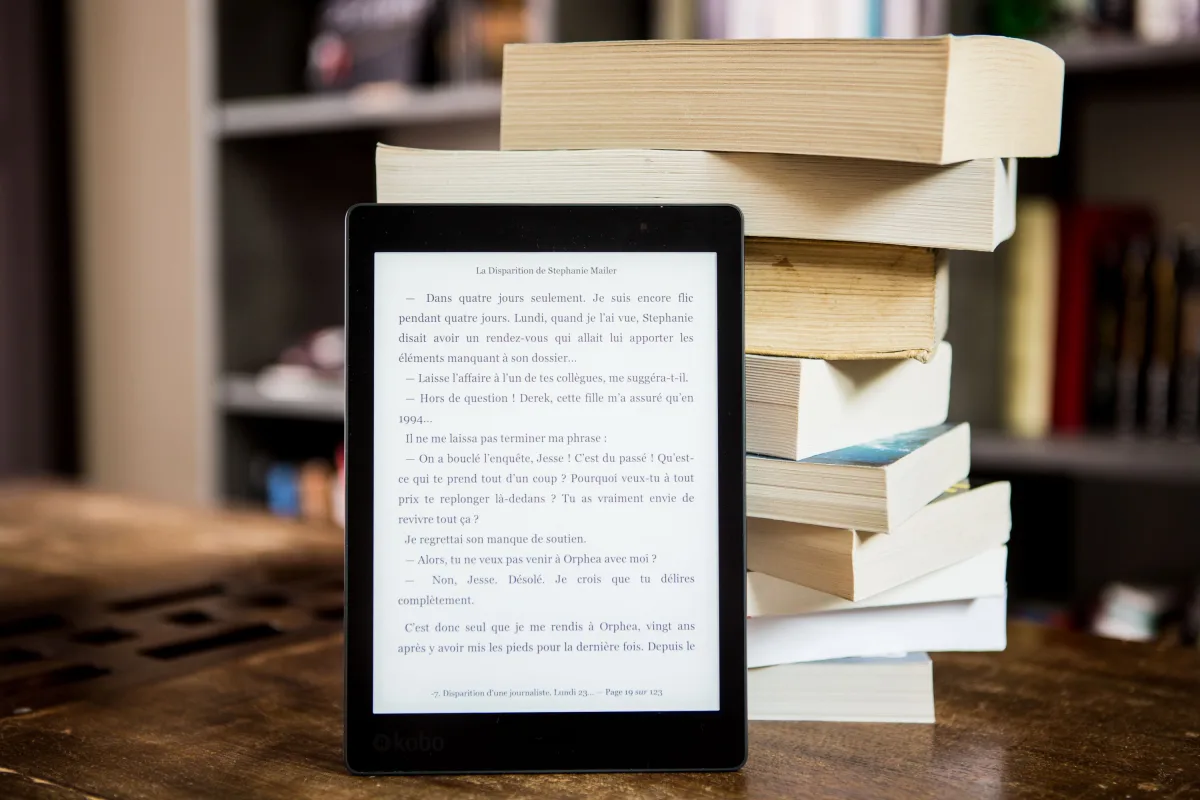
Quick verdict: Kindle Unlimited wins for high-volume eBook readers (4+ books/month) who love indie and genre fiction. Audible Premium Plus is the only service that lets you own what you listen to. Scribd/Everand is the most cost-efficient single subscription if you want both eBooks and audiobooks under one roof — as long as you're comfortable with access-only, not ownership.
This guide is based on manufacturer specifications, verified pricing data, and aggregated reader reviews. It does not reflect hands-on testing by Grounded Pick. We may earn a commission when you use our links to make a purchase.
Subscription book services are marketed as unlimited value. The math tells a different story.
The average American reads about 12 books per year — roughly one per month. At that pace, Audible Premium Plus at $14.95/month costs you nearly $15 per audiobook. That's more than buying the title outright on sale. Most subscription reviews skip this part entirely.
If you're researching the best eBook and audiobook subscriptions in 2026, here's what you actually need to know: Kindle Unlimited, Audible, and Scribd are not the same type of service competing on the same terms. They run on fundamentally different access models — borrowing, credits, and streaming unlocks — and picking the wrong one based on headline price alone will cost you money.
This guide maps each service's real mechanics to specific reader profiles. It also covers what happens to your library when you cancel — a question most comparison articles skip until after you've already subscribed.
If you're building out a broader subscription stack, the Best Subscription Services Guide 2026 covers how book services fit alongside video, music, and other recurring costs. And if books are part of a wider entertainment budget you're trying to optimize, the Books, Music & Entertainment Buyer's Guide 2026 breaks down the full landscape.
How Each Service Actually Works
Before you compare prices or catalog sizes, you need to understand the access model. The mechanics differ enough that choosing the wrong one can cost you real money.
Kindle Unlimited: A Library Card With a 10-Book Slot
Kindle Unlimited works like a library with a cap. You can borrow up to 10 titles at the same time. Want an 11th? Return one first. There are no per-book charges beyond the $11.99/month fee, no credits to track, and critically — no ownership. Cancel the subscription and every borrowed title disappears from your device immediately.
The catalog skews heavily toward indie and self-published books through Amazon's KDP platform. Big Five publisher titles — Penguin Random House, HarperCollins, Simon & Schuster, Hachette, Macmillan — are largely absent. Some Kindle Unlimited titles include narrated audio, but accessing that audio generally requires a separate Audible subscription or an outright purchase.
Audible: Credits That Actually Own Something
Audible runs on two tiers with very different value propositions.
Audible Plus (~$7.95/month) gives you unlimited listening from a rotating select catalog of roughly 11,000 to 70,000 titles, depending on the source. No credits, no ownership — just access.
Audible Premium Plus (~$14.95/month) adds one credit per month, exchangeable for any title in the full catalog. Here's the key differentiator: credits purchase a permanent license. Cancel your subscription and those audiobooks stay in your library, downloadable via the Audible app indefinitely. This is the only subscription among the three that delivers actual ownership.
Audible also sells credits in bulk at reduced per-credit rates. For heavy listeners finishing three or more audiobooks monthly, a bundle of three discounted credits can be more economical than the standard monthly plan.
Scribd/Everand: The Hybrid Streaming Model
Scribd — partially rebranded as Everand in some markets — sits between the other two. One flat fee (~$11.99/month) unlocks access to eBooks, audiobooks, magazines, and podcasts without per-book credits. The catch: popular or in-demand titles often fall behind the "premium unlock" gate, and the number of monthly unlocks is limited.
Cancel and all access ends immediately — including titles you've already unlocked. The partial rebrand has added confusion: some users encounter "Scribd" in one market and "Everand" in another, referring to the same service with the same mechanics.
Pricing: What You Actually Pay Per Book
Headline prices tell you almost nothing. Per-book cost at your actual consumption rate is the number that matters.
| Service | ~US Monthly Price (2026) | Access Model | Own After Cancel? |
|---|---|---|---|
| Kindle Unlimited | $11.99/month | Borrow up to 10 titles | No |
| Audible Plus | $7.95/month | All-you-can-listen (select catalog) | No |
| Audible Premium Plus | $14.95/month | 1 credit + Plus catalog access | Yes (credited titles only) |
| Scribd/Everand | $11.99/month | Open catalog + monthly unlocks | No |
Prices are approximate US figures as of mid-2026. Verify current pricing and promotional rates at checkout, as regional pricing varies.
Run the math at your actual pace:
- 1 eBook/month on Kindle Unlimited = ~$12 per book (worse than buying it)
- 8 eBooks/month on Kindle Unlimited = ~$1.50 per book (excellent value)
- 1 audiobook/month on Audible Premium Plus = ~$15 per book (worse than many sale prices)
- 4 audiobooks/month on Scribd = ~$3 per book (strong value)
Here's the bottom line: the combined cost of Kindle Unlimited plus Audible Premium Plus runs approximately $26.94/month. Scribd alone at $11.99/month covers both formats — a meaningful difference if you want a single subscription rather than stacking two.
Catalog Quality: What's Actually in the Library
Catalog size numbers are frequently misleading. A library of one million titles means little if the books you want aren't in it.
Audible
Audible has the largest audiobook catalog in the English-speaking market — hundreds of thousands of titles spanning bestselling fiction, nonfiction, classics, academic works, and contemporary releases. The Premium Plus credit gives you access to the full catalog, not just the rotating Plus selection. If a title exists as an audiobook, Audible almost certainly has it.
Kindle Unlimited
The 1 million+ title claim sounds enormous, but composition matters. The library is dominated by indie-published and KDP titles. Where it genuinely excels: romance, cozy mysteries, fantasy, and science fiction from indie authors. These communities are active on the platform and produce high-volume catalogs. If you read primarily Big Five bestsellers or recent nonfiction from major publishers, Kindle Unlimited will disappoint you regularly — the better strategy for those readers is to buy eBooks à la carte and use Audible credits for audio.
Scribd/Everand
Scribd has an edge over Kindle Unlimited for mainstream readers because it includes some Big Five titles. The transparency problem: Scribd doesn't clearly publish its total audiobook count, making it difficult to evaluate the catalog before you subscribe. Popular new releases frequently sit behind the unlock gate rather than the freely accessible library — which matters if you tend to read recently published titles.
Audio Quality and App Experience

This is a practical differentiator that rarely appears in subscription marketing.
Audible streams at 64 kbps. Scribd streams at 32 kbps. On basic earbuds, the difference is minor. On quality over-ear headphones during a long commute or focused listening session, the gap in clarity and depth is noticeable.
Device compatibility is where Audible's Amazon integration becomes a genuine convenience advantage. Audible works on Kindle devices, Alexa speakers, iOS, Android, and desktop. If you already own a Kindle, the ecosystem cohesion is real. Scribd/Everand is app-only — iOS and Android — with no dedicated hardware integration, though it's available globally, which matters for readers outside the US.
A word on Whispersync, because it's frequently misunderstood: the feature syncs your place between a Kindle eBook and its Audible audiobook, letting you switch seamlessly between reading and listening. What it does not do is unlock both formats with one purchase. You need to own the Kindle edition and have the Audible audiobook separately. Kindle Unlimited borrows don't qualify — you'd need to buy the Kindle edition outright. For anyone building a dual-format reading habit, this distinction is worth understanding before you subscribe.
Scribd offers a text-to-speech feature that converts eBooks to synthesized audio. It's a functional workaround, but synthesized speech is not equivalent to a professional narrator recording — a meaningful difference if performance quality matters to you.
What Happens When You Cancel?
This is the question most comparison articles skip until it's too late.
Audible Premium Plus: Every credit you spend purchases a permanent license. Cancel and your purchased audiobooks stay in your Audible library, downloadable via the app. You own them.
Kindle Unlimited and Scribd/Everand: Both operate on access-only models. Cancel either service and all titles — borrowed or unlocked — disappear immediately.
Consider this scenario: you use Scribd for six months and listen to three audiobooks per month. You cancel. All 18 audiobooks are gone. An Audible Premium Plus subscriber who cancels after six months retains six permanently owned titles. The Scribd subscriber paid ~$71.94 and owns nothing. The Audible subscriber paid ~$89.70 and owns six titles they can return to anytime.
The ownership distinction matters most for reference books, titles you reread, or content you want accessible long-term across family accounts. A practical hybrid approach: use Scribd/Everand for high-volume discovery reading, and reserve Audible credits for titles you know you'll want to revisit.
Free and Budget Alternatives Worth Knowing
Here's the underrated option most paid subscription comparisons don't want to lead with: Libby/OverDrive is free with a public library card and includes eBooks and audiobooks — including Big Five titles that Kindle Unlimited doesn't carry. The constraint is waitlists. Popular titles can have holds of weeks or months. A workable strategy: borrow an available audiobook on Libby while you wait in the queue for a more popular title.
Other alternatives worth knowing:
- Hoopla — another free library-linked service with no waitlists, though the catalog is smaller than Libby. Availability depends on your local library system.
- Kobo Plus Read & Listen — competitive value bundle for eBooks and audiobooks, particularly for readers outside the Amazon ecosystem or outside the US.
- Storytel — the strongest option for readers in markets where Audible and Kindle Unlimited have weaker catalogs (Scandinavia, parts of Asia, and other non-US regions).
- Perlego — purpose-built for students and professionals needing academic textbooks and professional titles, not a leisure reading service.
The honest recommendation: start with Libby and see how far it gets you before spending anything. It's the most underused tool in most readers' arsenals.
Which Service Is Right for You?
There's no single best service. The right answer depends on how you actually read.
If you read mostly eBooks and finish 4+ per month — Kindle Unlimited at $11.99/month makes mathematical sense, but only if your genre preferences match its indie-heavy catalog. Romance, cozy mysteries, and genre fiction from indie authors are well-served. If you want current Big Five bestsellers, you'll be frustrated regularly.
If you listen to 2+ audiobooks per month and don't need to own them — Start with Audible Plus at $7.95/month. Its rotating catalog is often underestimated. If you exhaust it or need specific titles, upgrade to Premium Plus or add Scribd.
If you want both eBooks and audiobooks under one subscription — Scribd/Everand at $11.99/month is the most cost-efficient single option for mixed-format readers, as long as you understand the unlock system and accept that you own nothing if you cancel.
If permanent ownership matters to you — Audible Premium Plus is the only subscription among the three that delivers it. Use credits strategically for titles you know you'll return to, and supplement with Libby for everything else.
If you're on a tight budget — Start with Libby. It's free, it includes Big Five titles, and it costs you nothing to try before committing to a paid subscription.
If you're a student or academic reader — Perlego is the specialist choice. The other three aren't built for textbooks.
For readers evaluating where book subscriptions fit in a broader digital entertainment stack, it's also worth comparing how these services compare to what you're spending on video streaming and gaming subscriptions — subscription fatigue is real, and the math across all categories adds up faster than most people expect.
Frequently Asked Questions
Can I use Kindle Unlimited and Audible at the same time? Yes. They're separate subscriptions that don't overlap — Kindle Unlimited covers eBooks (with some narrated audio), and Audible covers audiobooks. Many heavy readers use both, though the combined cost of ~$26.94/month is only justified if you're consuming high volumes in both formats.
Does Scribd have the same books as Audible? Partial overlap, but not the same catalog. Scribd includes some titles Audible carries, plus eBooks and magazines. Audible's audiobook catalog is larger and more consistently updated for major releases.
What happens to my Audible books if I cancel? Any title you purchased with a credit is permanently owned. It stays in your Audible library and can be downloaded via the app even without an active subscription. Titles in the Plus catalog (not purchased with credits) disappear when you cancel.
Is Scribd worth it for audiobooks specifically? It depends on your consumption rate. At 3–4 audiobooks per month, the per-title cost drops to $3–4, which is excellent value. The lower bitrate (32 kbps vs Audible's 64 kbps) and the premium unlock gate on popular titles are the main trade-offs.
Can I share Kindle Unlimited or Audible with family members? Kindle Unlimited borrowed titles can be shared to other devices on the same Amazon account but not across separate accounts. Audible has a Family Library feature that allows sharing of purchased audiobooks between two adult Amazon accounts. Scribd/Everand is single-account only.
Is Libby really free? Yes — with a public library card. Many US library systems offer Libby access, and some states have expanded digital library access significantly in recent years. Check your local library's website or the Libby app to verify what's available in your area.
Pricing data referenced from automateed.com's book subscription platform comparison (April 2026). Verify current pricing directly with each service before subscribing.
This article was drafted with AI assistance and fact-checked by our editorial team before publishing. Grounded Pick may earn a commission from purchases made through links on this page. Our editorial assessment is completed before any affiliate link is applied. Read our full disclosure →
Discussion
No comments yet. Be the first to share your thoughts.