
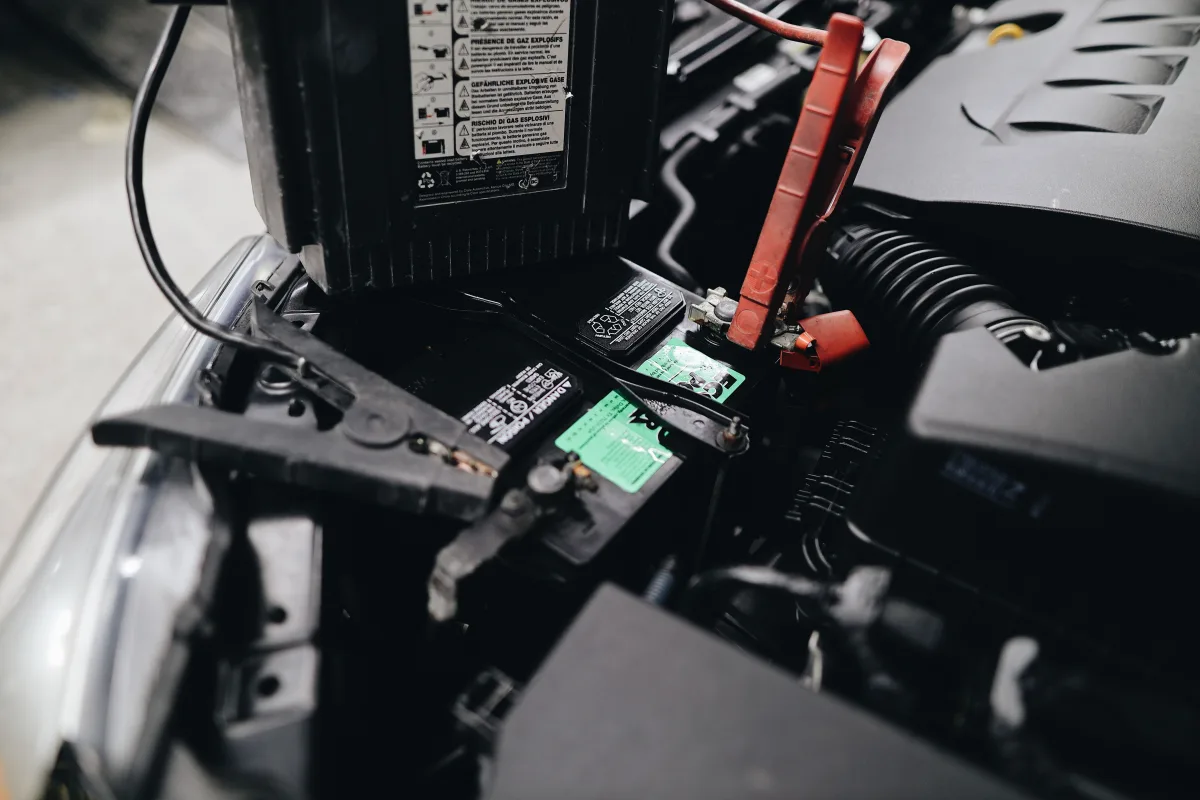
Researched and drafted with AI assistance; reviewed and fact-checked by the editorial team before publishing. This guide is based on manufacturer specifications, expert sources, and independent test data aggregated from verified publications. It does not reflect hands-on testing by Grounded Pick. How we review → | We may earn a commission when you use our links to make a purchase.
TL;DR — Quick Picks by Use Case
| Your Situation | Best Pick | Why |
|---|---|---|
| Compact car / mild climate | Weego 44s | Smartphone-sized, reverse-polarity protection, well-tested |
| Mid-size car / cold climate | NOCO Boost Plus GB40 | Reliable, compact lithium, consistent independent test scores |
| Truck / SUV / diesel / cold | NOCO GBX155 | 4,250-amp rating handles large engines and cold-weather margin |
| Full emergency kit | Uncharted Supply Co. The Overlander | Pre-assembled, comprehensive coverage tested by CNN Underscored |
The one thing most drivers get wrong: buying a jump starter based on price or brand recognition, not the CCA rating that determines whether it will actually start your engine in January. Read the CCA section before you buy anything.
Why Your "Insurance" Jump Starter May Be Useless Right Now
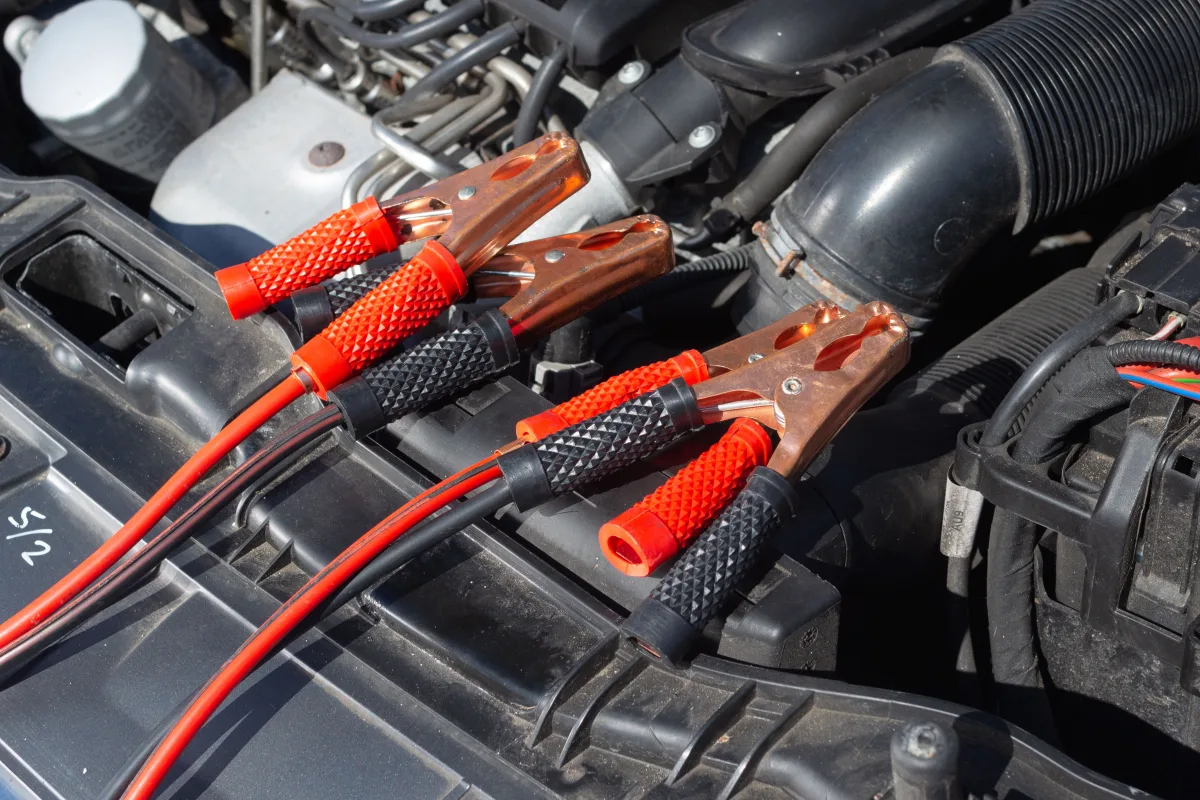
Picture this: it's 11 PM in January, you're in a parking garage, the temperature is in the teens, your phone is at 15%, and your car won't turn over. You have jumper cables in the trunk — and no other vehicle to connect them to.
This is not a rare scenario. It plays out thousands of times every winter across North America, and it illustrates why a dead battery is a safety issue, not just an inconvenience.
Here's the harder truth: a significant number of portable jump starters fail in exactly the conditions that kill batteries in the first place — cold weather, large engines, or units that have sat uncharged for six months. According to Coherent Market Insights' 2026 vehicle jump starter market report, North America accounts for 35.1% of global jump starter demand, with cold winter conditions in northern states and Canadian provinces cited as the primary driver.
Owning a jump starter is the right instinct. Owning the wrong one — or one that's been sitting dead in your trunk — gives you false confidence. This guide tells you which specs actually matter, which units held up under independent expert testing, and how to build a complete roadside kit worth trusting.
If you're building a broader vehicle preparedness plan — tires, insurance, maintenance — the Automotive Buyer's Guide 2026 covers the full spectrum of automotive ownership decisions.
Jump Starters vs. Portable Power Stations: Get the Category Right First
Before looking at a single product, understand that "portable jump starter" and "portable power station" describe two genuinely different categories — and most buyers conflate them.
As Car and Driver's tested roundup explains, portable power stations are larger, multi-purpose devices capable of running appliances and charging laptops. They can jump a car, but they're too bulky to keep in a glove box or small trunk corner.
Jump starters are compact — designed to do one thing: deliver a burst of current to a dead battery. The best ones are the size of a thick smartphone.
Here's how to choose the right category:
- Individual driver, personal vehicle, emergency use → compact lithium jump starter. You want something that lives in the car and is there when you need it, not something you have to remember to bring.
- Fleet manager, workshop, or frequent multi-vehicle use → power station capacity may justify the size and cost.
- Overlanding or extended off-grid trips → a hybrid unit with jump-start capability and USB/AC output makes sense.
Buying a power station for personal emergency use means paying for capacity you'll never use while carrying something the size of a small toolbox. Get the category right before you get the brand right.
The One Spec Most Buyers Ignore: CCA Ratings Explained
CCA — Cold Cranking Amps — is the single most important specification for evaluating whether a jump starter will work on your vehicle in cold weather. It measures how much current a unit can deliver for 30 seconds at 0°F while maintaining minimum voltage.
It's also the spec most buyers never check.
Here's what you need to know:
- Your vehicle's battery has a CCA rating printed on its label — usually on top of the battery. Look it up before you buy anything.
- Car and Driver notes that the average passenger vehicle battery carries a CCA rating of roughly 400–500 amps.
- Your jump starter's CCA rating should meet or exceed your battery's rating — and in cold climates, exceed it by a meaningful margin.
The stakes go up with engine size. Road and Track's comparison of two high-power units illustrates this clearly: the NOCO GBX155 is rated at 4,250 amps; Battery Tender's most powerful unit at 2,000 amps. For a diesel pickup or large V8 in freezing temperatures, the gap between those two numbers is the difference between starting and not starting.
Cold weather compounds the problem in two ways at once: the vehicle battery loses cranking capacity in freezing temperatures, and the lithium cells inside your jump starter also lose output capacity. Both the problem and the solution are weakened simultaneously. If you live in a cold climate, don't buy a jump starter that just meets your vehicle's CCA requirement — buy one that exceeds it.
The Best Compact Jump Starters of 2026: What Independent Testing Found
Best Overall Compact: Weego 44s
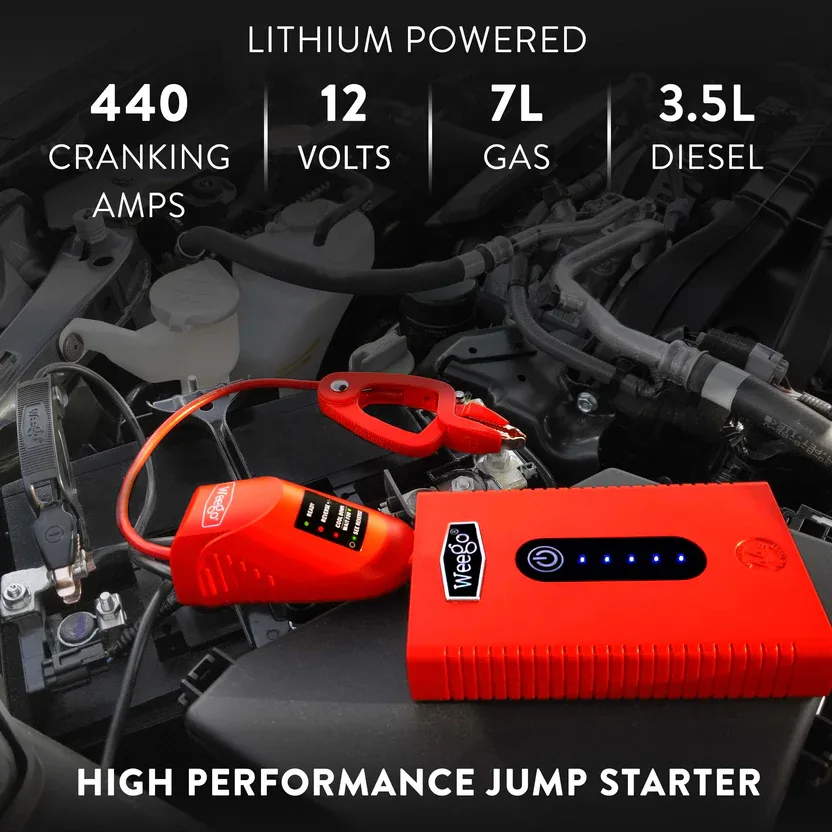
Wirecutter conducted the most methodologically rigorous evaluation in this category, researching 40 portable jump starters and hands-on testing 12 before selecting the Weego 44s as their top pick.
The reasoning is specific and worth understanding:
- Size: 5.62 × 3.44 × 1.04 inches, approximately 12 ounces — roughly a smartphone's footprint and weight. It fits in a jacket pocket, which means it will actually be with you when you need it, not buried in a trunk you can't reach.
- Reverse-polarity protection: If you attach the clamps incorrectly, the Weego 44s issues a red light and an audible alarm before any current flows. In a stressful midnight parking garage situation with cold hands, mistakes happen. That alarm prevents a recoverable error from becoming an expensive one — incorrect attachment can damage a vehicle's electrical system.
This is the unit for compact and mid-size vehicle owners in mild to moderate climates who prioritize portability and ease of use.
Best Reliable All-Rounder: NOCO Boost Plus GB40

For drivers who prefer a unit with a longer track record in the enthusiast community, Car and Driver recommends the NOCO Boost Plus GB40 as capable of jumping all but the largest consumer vehicle batteries.
Car and Driver's assessment is direct: compact lithium units like the GB40 have made heavy lead-acid jump packs largely obsolete for personal vehicle use. The old-style units were heavy, prone to sulfation if left uncharged, and offered no real-world advantage for a driver who just needs to start one car. The GB40 is compact, requires minimal maintenance, and has earned consistent praise for reliability across multiple independent review publications.
This is the unit for drivers who want proven, no-fuss reliability with a brand that's widely supported and reviewed.
Best High-Power Option: NOCO GBX155

For trucks, large SUVs, diesel engines, or anyone in a particularly cold climate who wants substantial headroom above their vehicle's CCA rating, Road and Track tested the NOCO GBX155 and found that the quality and consistency of NOCO's smaller GB40 translated well to the more powerful unit.
The GBX155's 4,250-amp rating provides substantial margin over most consumer vehicle CCA requirements. It's larger and more expensive than the GB40 — but for truck owners, that extra cost buys meaningful cold-weather reliability that a smaller unit simply cannot provide.
Best for Complete Kit Context: Limitless Innovations JumpSmart
CNN Underscored, evaluating jump starters within the context of complete emergency kits rather than as standalone products, selected the Limitless Innovations JumpSmart as their battery jump starter pick. Its selection in a broader kit context reflects a practical reality: a jump starter is most useful when paired with the other tools that address the full range of roadside failures.
Quick Comparison: Top Jump Starters of 2026
| Model | Best For | CCA Rating | Size | Key Feature |
|---|---|---|---|---|
| Weego 44s | Compact cars, portability | [Verify on manufacturer site] | ~12 oz, pocket-sized | Reverse-polarity alarm |
| NOCO GB40 | Most passenger vehicles | [Verify on manufacturer site] | Compact | Proven track record |
| NOCO GBX155 | Trucks, SUVs, diesel, cold climates | 4,250A | Larger | Maximum cold-weather margin |
| JumpSmart (Limitless Innovations) | Part of a complete kit | [Verify on manufacturer site] | Compact | Kit integration |
Important maintenance note: Every lithium jump starter self-discharges over time. A unit stored for six months without recharging may not have enough capacity to start your car. Recharge every three to six months — set a recurring calendar reminder. The unit in your trunk that's dead is no better than no unit at all.
How to Use a Jump Starter Safely (Read This Before You Need It)
Most buying guides skip the usage instructions entirely. Don't be the driver who's reading the manual in the dark with cold hands. Read this now, then read your unit's specific manual.
Road and Track's tested review outlines the correct procedure:
- Attach the red clamp to the positive terminal of the dead battery.
- Attach the black clamp to an unpainted metal ground point on the vehicle frame — not the negative battery terminal. Grounding to the frame reduces the risk of igniting hydrogen gas that can accumulate near a battery.
- Power on the jump starter and wait for it to indicate readiness.
- Attempt to start the engine. If it doesn't turn over immediately, wait a few moments before trying again. Some units automatically shut down during prolonged cranking — this is a protective feature, not a malfunction.
- Once the engine starts, remove the black clamp from the ground point first, then remove the red clamp from the positive terminal.
- Run the engine for at least 15–30 minutes to allow the alternator to begin recharging the battery.
If you're using the Weego 44s and see a red light with an audible alarm: stop immediately. That's the reverse-polarity protection. Recheck which clamp is on which terminal before proceeding.
After a successful jump start: have your battery tested at an auto parts store — most do it free. A battery that died once is at elevated risk of failing again, particularly in cold weather. Knowing whether you need a replacement before the next cold snap is worth 10 minutes.
Beyond the Jump Starter: What a Complete Emergency Car Kit Should Contain
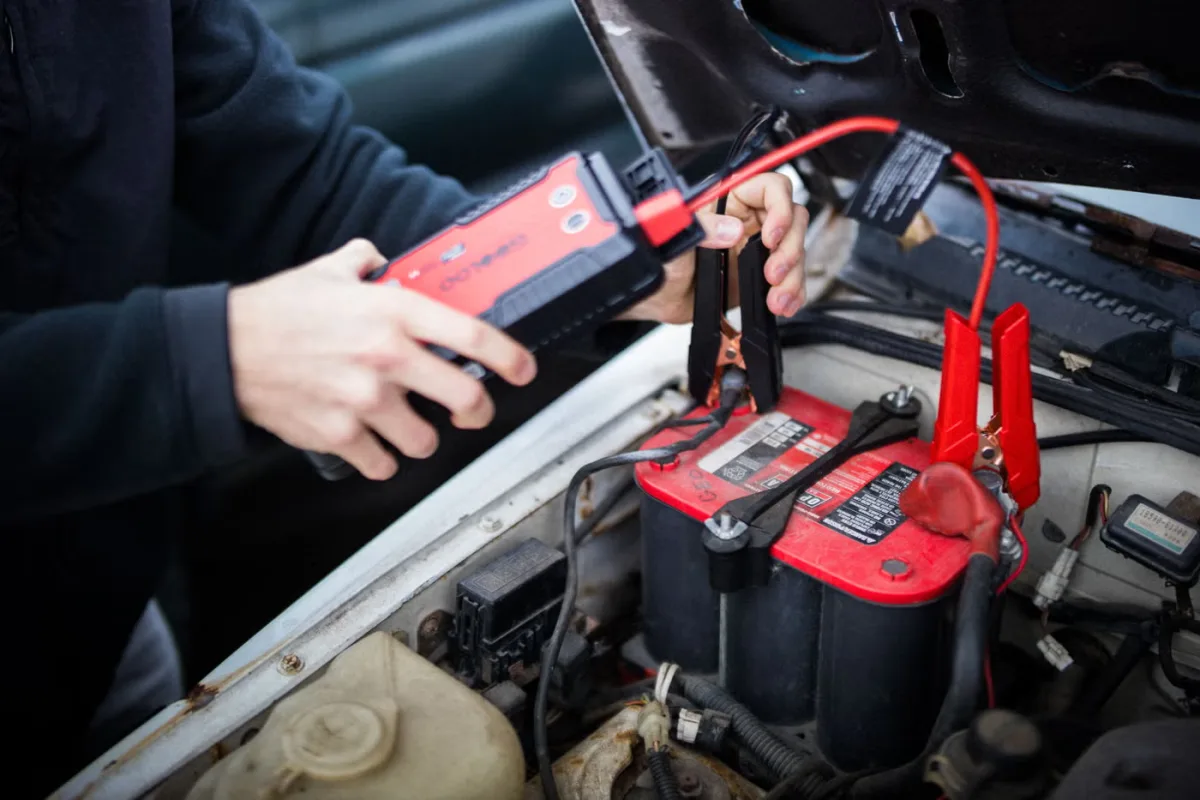
A jump starter solves one problem. A complete emergency kit solves many.
The two most common roadside failures are battery issues and flat tires — but accidents, medical emergencies, and visibility failures each represent scenarios where the right gear makes a material difference in outcome. If you're already thinking carefully about what goes in your car, it's worth applying the same attention to your best dash cams 2026 and car GPS navigation systems — documentation and navigation both matter when something goes wrong far from home.
Best Overall Emergency Kit: Uncharted Supply Co. The Overlander
CNN Underscored tested multiple emergency car kits and named the Uncharted Supply Co. The Overlander as their best overall pick for comprehensive coverage.
Don't Overlook This $10–$20 Item: Resqme Rescue Tool
CNN Underscored's quick-pick list also includes the Resqme Rescue Tool — a combined seatbelt cutter and window smasher — as a low-cost, high-value addition that most drivers overlook. If your car goes into water or a door is jammed after an accident, that tool may be the most important thing in the vehicle.
First Aid: Not All Kits Are Equal
First aid is non-negotiable — but first aid kit quality varies significantly.
Car and Driver recommends keeping necessary medications — inhalers, EpiPens — accessible alongside standard first aid supplies, not buried under other gear.
What Car? tested first aid kits specifically and found meaningful differences in trauma capability between basic kits and more complete ones. Their testing highlighted the value of ambulance bandages, triangular bandages, and trauma dressings designed to control bleeding from serious wounds. A kit with only plasters and antiseptic wipes is not adequate for a serious accident.
Flashlight
Car and Driver recommends the ThruNite Archer 2A V3 for nighttime roadside work. A quality flashlight is essential for safely attaching jump starter clamps, changing a tire, or signaling for help in low visibility.
Jumper Cables (Yes, Even If You Own a Jump Starter)
Despite owning a jump starter, keeping a set of jumper cables in the vehicle remains worthwhile. If your jump starter is depleted or insufficient, cables give you a fallback option whenever another driver is available. Car and Driver's pick for jumper cables is the Cartman set.
Complete Emergency Kit Checklist
- [ ] Jump starter matched to your vehicle's CCA rating
- [ ] Jumper cables (backup)
- [ ] Quality first aid kit with trauma capability (not just plasters)
- [ ] Seatbelt cutter / window smasher (Resqme or equivalent)
- [ ] Reliable flashlight with fresh batteries
- [ ] Roadside visibility kit (reflective triangles or flares)
- [ ] Emergency medications if applicable (EpiPen, inhaler)
- [ ] Basic tools (lug wrench, jack for flat tire)
- [ ] Mylar emergency blanket
Cold Weather and Jump Starters: What Changes Below Freezing
Cold weather creates a compounding problem:
- The vehicle battery loses chemical activity in freezing temperatures, delivering less cranking power precisely when the engine needs more of it to turn over in thick, cold oil.
- The lithium cells in your jump starter also lose output capacity in the cold.
Both the problem and the solution are weakened simultaneously. A battery that performs adequately in October may not have enough reserve to start a cold engine in February. A jump starter that barely meets your vehicle's CCA rating under ideal conditions may fall meaningfully short when both devices are operating at sub-freezing temperatures.
Two practical adjustments for cold-climate drivers:
- Buy with margin: Choose a jump starter with a CCA rating that meaningfully exceeds your vehicle's requirement — not one that just meets it.
- Store smart: Keeping your jump starter in the trunk during winter means it will be cold when you need it. Store it in the cabin — under a seat or in the back seat area — where the vehicle's interior temperature keeps it closer to its rated operating range.
Coherent Market Insights identifies cold winter conditions in northern states and Canadian provinces as a primary driver of the North American jump starter market — reflecting just how widespread and recurring this problem is.
How the Jump Starter Market Has Evolved: Why 2026 Options Outperform Older Units
The shift from lead-acid to lithium-ion chemistry is the single biggest improvement in this category over the past decade.
Lead-acid jump packs were heavy, bulky, prone to sulfation damage if left discharged, and required more maintenance than most drivers provided. Car and Driver notes that compact lithium options like the NOCO GB40 have made those older units largely obsolete for personal vehicle use — comparable or better performance, dramatically smaller size, and minimal maintenance requirements.
Market conditions are also driving continued improvement. According to Coherent Market Insights, the post-pandemic increase in remote work and outdoor activities has boosted demand for portable power solutions. This is pushing manufacturers toward more versatile units — jump starters that add USB charging ports, built-in LED flashlights, and air compressors to the core jump-starting function.
Road and Track identifies NOCO, Battery Tender, and CTEK as the dominant quality benchmark brands in battery accessories for 2026. Their testing found that NOCO's quality and consistency scales from smaller units like the GB40 to larger, more powerful options like the GBX155 — a meaningful finding for buyers deciding whether to step up in power tier.
While you're thinking about automotive preparedness, it's also worth considering your car's other safety and utility gear: a radar detector (legal in most states), auto tools for DIY mechanics, and car floor mats and seat covers are all part of keeping a well-maintained, prepared vehicle.
Frequently Asked Questions
How long does a jump starter hold its charge?
Most lithium-ion jump starters hold a usable charge for several months under normal storage conditions, but self-discharge is real. Recharging every three to six months is the right maintenance schedule. If the unit has been sitting longer than that, recharge it fully before relying on it.
Can one jump starter work on both a small sedan and a large truck?
Not necessarily. A compact unit like the NOCO GB40 is rated for most consumer passenger vehicles but may not have sufficient CCA output for a large diesel truck or high-displacement V8. Check your vehicle's battery CCA rating and compare it to the jump starter's rated CCA before purchasing. For trucks and large SUVs, step up to a higher-rated unit like the NOCO GBX155.
Is it safe to leave a jump starter in a hot car in summer?
Prolonged exposure to high heat degrades lithium-ion battery cells and reduces the unit's capacity over time. In summer, store the jump starter in the cabin rather than a trunk that can reach extreme temperatures. Avoid leaving it on the dashboard in direct sunlight.
Do I still need jumper cables if I own a jump starter?
Yes. A jump starter is your primary tool, but cables are a reliable backup for situations where the jump starter is depleted, unavailable, or insufficient for the engine. Keep both — the Cartman Jumper Cables are Car and Driver's specific cable recommendation.
What should I do after a successful jump start?
Run the engine for at least 15–30 minutes to allow the alternator to partially recharge the battery. Then have the battery tested at an auto parts store. A battery that has failed once is at elevated risk of failing again, particularly in cold weather. Knowing whether replacement is needed before the next cold snap prevents a repeat emergency.
Are there jump starter options for electric vehicles?
EV battery systems operate differently from 12V lead-acid setups. Most EVs do have a 12V auxiliary battery that can be jumped in an emergency, but the process differs by manufacturer. If you drive an EV, check your owner's manual for the specific procedure. For broader EV preparedness, the best EV charging networks guide for 2026 covers charging infrastructure planning that reduces the risk of running out of range in the first place.
Final Decision Framework: Which Jump Starter Is Right for You?
The right jump starter depends on three variables: vehicle size, climate, and storage habits. Here's how to apply them:
Compact car or small SUV, mild climate: The Weego 44s or NOCO GB40 covers your needs. Both are small, reliable, and well-tested by independent reviewers. The Weego 44s earns the edge for its reverse-polarity protection and smartphone-sized form factor.
Compact to mid-size vehicle, cold climate (northern states, Canada): Still consider the Weego 44s or GB40, but store the unit in the cabin during winter and recharge it at the start of each cold season. Confirm that the unit's CCA rating exceeds your battery's rating — not merely matches it.
Truck, large SUV, diesel engine, or cold climate with a large vehicle: Step up to the NOCO GBX155 or a comparable high-CCA unit. The extra cost and size are justified by the reliability margin you gain when a smaller unit would fail.
Building a complete emergency kit from scratch: Start with a jump starter matched to your vehicle, add jumper cables as backup, then add a quality first aid kit with trauma capability, a seatbelt cutter/window smasher, a reliable flashlight, and roadside visibility gear. CNN Underscored's pick — the Uncharted Supply Co. The Overlander — provides a pre-assembled starting point for drivers who prefer a single comprehensive purchase.
Whatever you buy, set a recurring calendar reminder every three months to check and recharge your jump starter. That two-minute habit is what turns a purchase into actual preparedness.
Discussion
No comments yet. Be the first to share your thoughts.