

This guide is based on manufacturer specifications, expert sources, and verified customer feedback aggregated from multiple independent sources. It does not reflect hands-on testing by Grounded Pick. This article was drafted with AI assistance and fact-checked by our editorial team before publishing. We may earn a commission when you use our links to make a purchase — this never influences our rankings.
Most parents buying nursery furniture sets make the same expensive mistake: they count pieces instead of measuring floor space. A five-piece set crammed into a 10×10 room doesn't create a functional nursery — it creates an obstacle course you'll navigate at 3 a.m. while holding a crying newborn.
Here's the bottom line before we go deeper: the best nursery furniture set for your family is the smallest set that covers your three genuine needs — a safe sleep surface, clothing storage, and a changing solution. Everything beyond that is additive, and often regrettable.
This guide breaks down what you actually need in 2026, which safety certifications matter (and why they test for completely different things), how to read convertibility claims critically before you spend $250 on a conversion kit you didn't know was required, and an honest brand-by-brand comparison with real trade-offs.
What a Complete Nursery Set Actually Includes — and Where Most Parents Overbuy
Nursery furniture sets are sold in configurations ranging from two pieces to six or more. Before you compare brands or aesthetics, run every set through one filter first: does each piece serve a distinct function, or does it duplicate something else in the package?

The three pieces every nursery genuinely needs:
- A crib or cot — the non-negotiable anchor of any nursery.
- Storage for clothing — a dresser, chest, or wardrobe, but not necessarily all three.
- A changing solution — either a dedicated changing table, a dresser with a changing topper, or a floor-level changing pad.
Everything beyond these three — a bookshelf, a wardrobe, a glider, a toy chest — is additive. That sounds obvious, but most parents don't apply this filter before clicking "add to cart."
The most common redundancy: a standalone changing table alongside a dresser with a changing topper. A changing table is single-purpose. Most parents phase it out within 18–24 months once the child is mobile. A dresser with a changing topper, by contrast, serves as clothing storage from day one and continues doing so long after the changing pad is removed. In a standard 10×10 nursery, cutting the standalone changing table and switching to a dresser-topper combination recovers roughly 4–6 square feet of floor space.
Similarly, a wardrobe is only genuinely useful in rooms without built-in closets. If your nursery has a standard reach-in closet, a wardrobe duplicates that storage and consumes floor space you could use for a reading chair — or simply leave open as your child starts walking.
Retailers package five- and six-piece sets because bundling drives higher average order values — not because every piece in the bundle belongs in every nursery.
The 2026 Design Shift You're Already Seeing: Biophilic and Natural
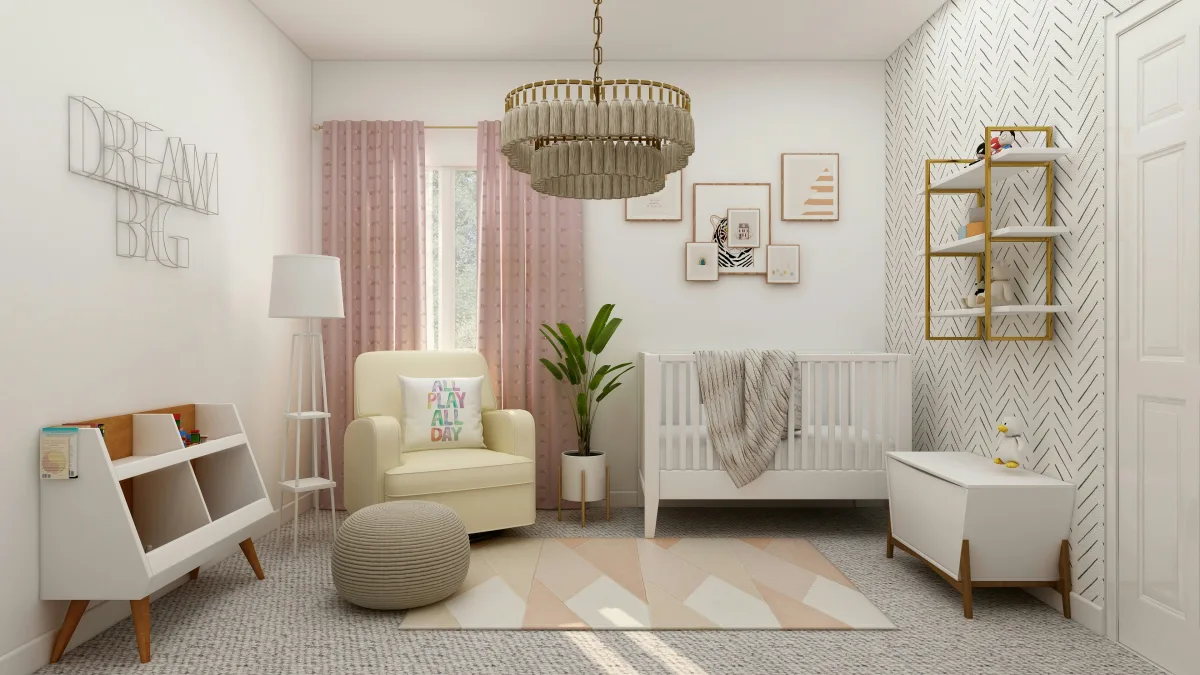
If you've browsed nursery furniture in the past six months, you've already noticed: the all-white MDF nursery that dominated the early 2020s is being replaced by something warmer and more textured.
The dominant aesthetic of 2026 is biophilic design — furniture and color palettes that bring the natural world into the baby's environment. Colors like sage green, muted terracotta, and sandy beige are gaining ground. Solid oak, walnut, and rattan are the top material choices this year, creating a look that reads as timeless rather than trend-driven. A sage green nursery with a natural oak crib won't look dated in three years the way an all-grey chevron nursery from 2018 does now.
This shift is about more than aesthetics. MDF (medium-density fiberboard) and particleboard — the materials behind most budget white nursery sets — are manufactured using adhesives that can off-gas formaldehyde and other volatile organic compounds (VOCs) for months after purchase. Solid wood, by contrast, has naturally low VOC emissions. The biophilic design trend and the push for non-toxic nursery environments are, in 2026, the same movement.
Modern nursery furniture in 2026 is best understood as adaptable, non-toxic equipment designed to grow with a child — not a decorative purchase that needs to be replaced every few years.
The Delta Children Penelope Collection is a practical, widely available example of this aesthetic: sustainable pine with a smooth satin glaze finish. At the premium end, Spain-based Micuna uses FSC-certified wood and water-based paints — a European expression of the same biophilic philosophy.
Safety Certifications: What GREENGUARD Gold and JPMA Actually Test For
Safety certifications on nursery furniture are among the most misunderstood elements of the buying process. Many parents treat them as interchangeable marketing badges. They're not. The two certifications that dominate the 2026 market test for entirely different things.
GREENGUARD Gold
GREENGUARD Gold certification, administered by UL (Underwriters Laboratories), tests products for emissions of over 10,000 chemicals and verifies that VOC levels are low enough to meet strict indoor air quality standards. This matters specifically because a baby sleeps in their crib 12–16 hours per day — in a small, often poorly ventilated room, directly adjacent to a developing respiratory system.
Babyletto's extensive GREENGUARD Gold certification across its full line — cribs, dressers, and other pieces — has been a significant driver of its market position. Dream On Me and Evolur's Synergy and Aurora collections carry the same certification. The Nestig Cloud Crib pairs GREENGUARD Gold status with sustainably sourced Brazilian pine construction.
JPMA Certification
The Juvenile Products Manufacturers Association (JPMA) certification covers structural and mechanical safety: crib slat spacing, mattress support integrity, hardware stability, and drop-side mechanisms. Where GREENGUARD Gold asks "is this furniture chemically safe to be near," JPMA asks "will this furniture hold together safely under real-world use conditions."
Both certifications matter. A crib that passes GREENGUARD Gold but has poorly anchored mattress support hardware is still a hazard.
The practical takeaway: check whether certifications apply to the full set or only to specific pieces. A brand may certify its crib but not its dresser. Look for certification logos on individual product pages — not just on the brand homepage — and verify whether testing was conducted by a named third-party lab.
For a broader view of safety standards across infant and toddler products, the Baby & Kids Product Reviews and Safety Guides 2026 covers certifications well beyond nursery furniture.
Convertible Cribs: How to Read the "7-in-1" Claims Before You Commit
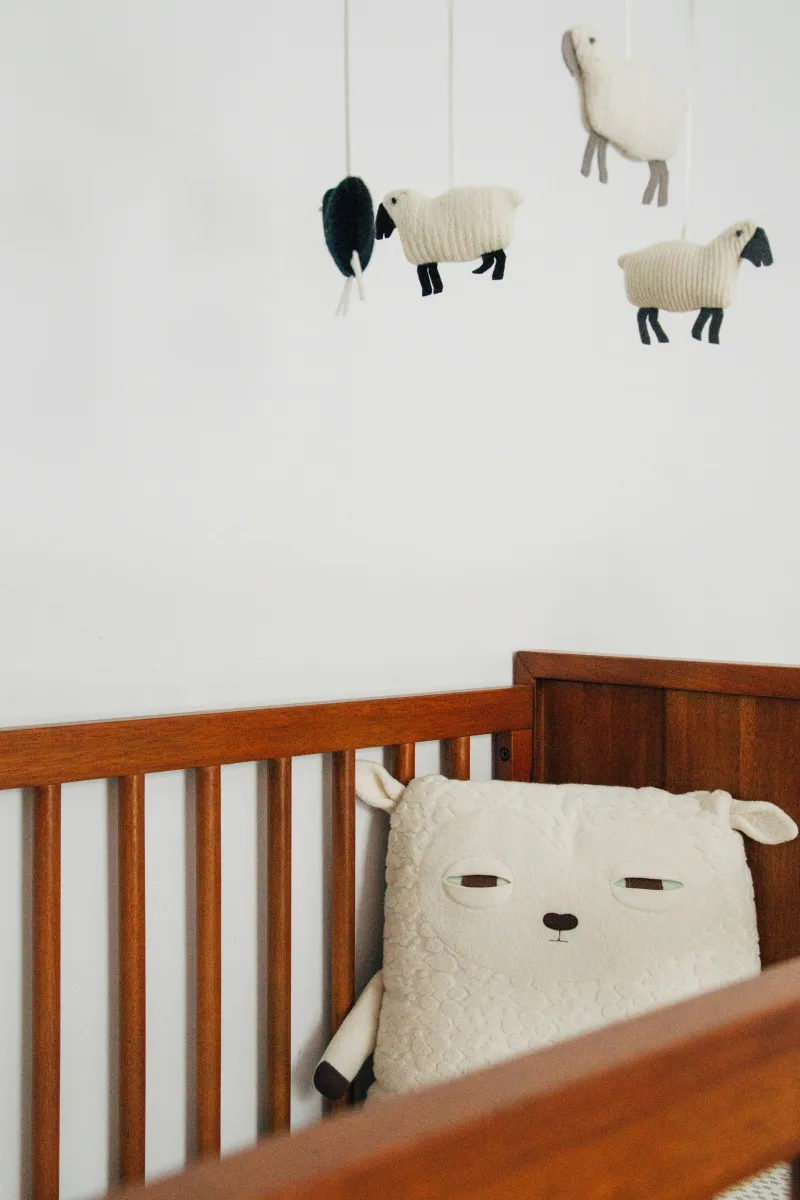
Convertibility is the most heavily marketed feature in 2026 nursery furniture — and the feature most likely to disappoint buyers who don't read the fine print. The promise is compelling: one piece of furniture that grows from newborn to teenager. The reality requires a closer look.
What the Conversion Numbers Actually Mean
A 3-in-1 crib converts to a toddler bed (by removing one side rail) and a daybed. A 5-in-1 adds a full-size bed conversion. A 7-in-1 system transitions through crib, toddler bed, daybed, and eventually a full-size bed, with additional configurations in between.
What most marketing doesn't prominently disclose: nearly every conversion beyond the toddler bed stage requires a separately purchased conversion kit. These kits typically run $150–$250 depending on the brand. Factor that into your total cost calculation before deciding a 7-in-1 crib is a better value than a 3-in-1.
Mattress Compatibility: The Hidden Second Cost
A mini crib uses a smaller mattress (approximately 24×38 inches) than a standard crib (28×52 inches). When a convertible crib transitions to a full-size bed, it requires a full-size mattress — a completely separate purchase.
The Nestig Cloud Crib is notable here: it includes a mini mattress and converts from mini crib to full crib to toddler bed, with three adjustable mattress heights and a 60-day trial period. That trial is genuinely rare in this category and worth factoring into a decision. The Babyletto Hudson 3-in-1 Convertible Crib remains one of the most consistently recommended mid-range convertible cribs for its build quality and straightforward conversion process. At the premium end, the Pali Diamante Forever Crib — made in Italy from select sustainable hardwood, GREENGUARD Gold certified, and convertible to toddler bed, daybed, and full-size bed — represents what a long-lifespan crib system looks like when the materials can actually support a decade of use.
The core rule: convertibility only delivers its promised value if the crib is built from solid wood. A particleboard or MDF crib that "converts" to a toddler bed will show structural wear within two to three years of active use. The full-size bed conversion — which is supposed to happen around age five — will often not be structurally viable by then.
Leading Nursery Furniture Brands of 2026: Honest Strengths and Trade-Offs
The baby bedroom furniture market includes major players such as IKEA, Carter's, Graco, Stokke, Delta Children, DaVinci Baby, Babyletto, Pottery Barn Kids, Dream On Me, BabyBjörn, and Chicco. Here's an honest breakdown of the brands most relevant to parents buying complete sets in 2026.
| Brand | Price Tier | Key Strength | Honest Trade-Off | Best For |
|---|---|---|---|---|
| Babyletto | Mid–Premium | GREENGUARD Gold across full line; strong eco credentials | Higher price for what is sometimes rubberwood construction | Eco-conscious buyers who prioritize chemical safety |
| Delta Children | Budget–Mid | Consistently meets and exceeds safety standards; wide range | Some budget pieces use MDF; aesthetic is functional rather than distinctive | Budget-conscious buyers who won't compromise on safety |
| Graco | Budget–Mid | 60+ year track record; 100M+ products shipped; 98% parent satisfaction | Conservative design aesthetic; limited biophilic options | Parents prioritizing proven reliability over design |
| Stokke | Premium | Ergonomic Scandinavian design; adjustable height for parent comfort | Very high price; some models require proprietary accessories | Design-forward buyers with larger budgets |
| Dream On Me / Evolur | Mid | Strong convertibility focus; GREENGUARD Gold certified | Less brand recognition; customer service reviews are mixed | Parents prioritizing long-term convertibility value |
| West Elm | Mid–Premium | Contemporary aesthetic; responsible sourcing; matches adult home décor | Limited safety certification transparency on some pieces | Parents who want nursery furniture to integrate with existing interiors |
| Micuna | Premium | FSC-certified wood; water-based paints; European craftsmanship | Limited US retail availability; premium pricing | Eco-conscious buyers seeking European minimalist design |
Graco's safety track record deserves specific emphasis: the brand has shipped over 100 million products and earned 98% parent satisfaction in independent surveys. Delta Children consistently meets and exceeds safety standards on cribs and changing tables — a meaningful distinction in a category where some brands self-report compliance without third-party verification.
How to Choose the Right Nursery Set for Your Room Size
Step 1: Measure Before You Browse
Take the actual dimensions of your nursery before opening a single product page. Note: ceiling height, not just floor space. A 72-inch wardrobe cannot be stood upright in a room with standard 8-foot ceilings once you account for baseboards. This is a common, expensive mistake.
Minimum clearances that matter:
- 3 feet of clear floor space in front of a dresser for drawers to open fully.
- 2 feet between the crib and the nearest wall or piece of furniture for safe access.
- At least 4 feet of open floor space somewhere in the room for diaper changes, dressing, and eventually play.
Step 2: Decide on Your Changing Solution First
This decision eliminates the most common redundancy in nursery sets. Choose one of three approaches:
- Dresser with changing topper — the most space-efficient solution; the dresser continues as clothing storage after the toddler stage.
- Standalone changing table — only practical if you need the dedicated storage shelf for diapers and supplies and have floor space to spare.
- Floor-level changing pad — the most minimal option, works well in very small rooms.
Once you've made this choice, look for sets that include your chosen solution — not sets that include both a changing table and a dresser-with-topper combination.
Step 3: Apply the Convertibility Filter
If your budget allows for a 4-in-1 or higher crib, verify:
- Is the frame solid wood or MDF/particleboard?
- What conversion kit is required, and what does it cost?
- What mattress size does the toddler bed or full-size conversion require?
If the crib is MDF, the convertibility marketing is largely aspirational. Budget accordingly.
Nursery Furniture and the Wider Baby Gear Picture
A nursery set is typically one part of a larger first-year purchase sprint. Parents who are also evaluating infant monitors alongside furniture decisions will find the Best Baby Monitors 2026: Video, Audio & Smart Options guide a useful companion — particularly the section on placement relative to crib positioning. Similarly, parents thinking through clothing storage as part of the nursery setup may want to cross-reference Best Baby Clothing Brands 2026 for a sense of how much drawer and hanging space different wardrobe sizes actually require.
For parents navigating the full range of first-year product decisions, the Baby & Kids Product Reviews and Safety Guides 2026 is a useful hub that maps the major categories — from baby formula and feeding products to organic baby food — with the same research-based approach applied here.
And while nursery furniture is the immediate priority, it's worth thinking ahead: parents who are already considering what toys will fill that bookshelf or toy chest should take a look at Best Kids' Toys 2026: Educational, STEM & Classic Picks — the guide covers how different toy categories interact with room layout and storage needs.
What Does a Good Nursery Furniture Set Cost in 2026?
Budget ranges in 2026 have shifted slightly upward from 2024, reflecting both materials inflation and growing consumer preference for solid-wood and certified products.
| Budget Tier | Realistic Price Range | What You Can Expect |
|---|---|---|
| Entry | $400–$800 for a 3-piece set | MDF or particleboard construction; functional safety; limited convertibility |
| Mid-range | $800–$1,800 for a 3-piece set | Solid wood options emerge; GREENGUARD Gold more common; 3-in-1 or 4-in-1 cribs |
| Premium | $1,800–$4,000+ for a full set | Solid hardwood; full third-party certification; 5-in-1 or 7-in-1 convertibility; European craftsmanship |
The mid-range tier ($800–$1,800) is where the value inflection point sits for most families. At this price, you can find GREENGUARD Gold certified cribs in solid or sustainable wood, dressers with adequate drawer hardware, and conversion kits that are still reasonably priced. The entry tier is viable if you're prioritizing safety certification over material and design; the premium tier is justified if you're confident the furniture will genuinely be used across multiple children or conversion stages.
Important reminder: conversion kits are almost always sold separately. Add $150–$250 to your mid-range crib budget if you intend to use the toddler bed or full-size bed conversion down the line.
Frequently Asked Questions
How many pieces does a nursery furniture set need to have? A functional nursery needs exactly three things: a safe sleep surface, clothing storage, and a changing solution. Sets with more than three or four pieces often include redundant items — particularly a standalone changing table alongside a dresser-with-topper. For most standard nursery rooms (10×10 to 12×12 feet), a three-piece set is the optimal starting point.
Is a convertible crib actually worth the higher price? It depends entirely on the material. A solid wood convertible crib that costs $600–$900 and converts cleanly to a toddler bed and daybed is genuinely good long-term value. A particleboard crib marketed as "7-in-1" at $299 will likely show structural wear by age two or three — well before the later conversions become relevant. The material determines whether convertibility is a real feature or a marketing claim.
What's the difference between GREENGUARD and GREENGUARD Gold? Standard GREENGUARD certifies that a product meets baseline chemical emission standards for adults. GREENGUARD Gold applies stricter standards specifically designed for products used by children and in schools — it tests for a wider range of chemicals at lower acceptable thresholds. For a nursery, GREENGUARD Gold is the relevant certification.
Do I need a changing table if I have a dresser? No — provided you use a dresser with a removable changing topper. A dresser-topper combination gives you a dedicated changing surface at the appropriate height plus full clothing storage, in a footprint smaller than a standalone changing table. The standalone changing table is only worth the floor space if you specifically want lower shelving for diapers and supplies at hip height.
What safety standard should a crib meet in the US? All cribs sold in the US must comply with the Consumer Product Safety Commission (CPSC) federal safety standards for full-size and non-full-size cribs, which ban drop-side cribs and mandate specific slat spacing, mattress support, and surface durability requirements. JPMA certification adds independent third-party verification that a specific product actually meets these standards — rather than relying on the manufacturer's self-assessment.
When should I set up the nursery? Most parents aim to have the nursery fully set up by week 36 of pregnancy to allow time for off-gassing (particularly important for MDF furniture), furniture assembly, and any returns or exchanges. If you've chosen solid wood furniture with GREENGUARD Gold certification, off-gassing is less of a concern — but the assembly and exchange timeline still applies.
The Bottom Line: Choose for Your Room, Not for the Photo
The best nursery furniture set in 2026 is not the one with the most pieces, the highest "in-1" count, or the most photogenic finish. It's the set whose individual pieces each earn their floor space, whose materials will hold up through the conversion stages you actually plan to use, and whose safety certifications have been verified by a named third party — not self-reported by the manufacturer.
For most families:
- On a tight budget: Delta Children or Graco 3-piece sets with verified JPMA certification.
- Best mid-range value: Babyletto Hudson 3-in-1 crib paired with a matching dresser from the same collection.
- Best for longevity: Pali Diamante (premium) or Dream On Me/Evolur for GREENGUARD Gold + genuine convertibility in solid construction.
- Best design-forward choice: Stokke (if budget allows) or Micuna for European craftsmanship and non-toxic finishes.
Measure your room. Decide on your changing solution first. Verify the material before trusting the convertibility claim. That order of operations will save you more money than any bundle discount.
Affiliate disclosure: Grounded Pick may earn a commission when you click links or make purchases through our site, at no extra cost to you. This helps fund this independent site. Our editorial recommendations are completed before any affiliate link is applied and are never influenced by commercial relationships. Read our full disclosure →
Discussion
No comments yet. Be the first to share your thoughts.