
There is no single "best" wireless earbud in 2026 — there is only the best earbud for your phone, your ears, and how you actually listen. Independent lab testing shows the Sony WF-1000XM6 leads every rival in raw sound quality, the Apple AirPods Pro 3 wins on mid-range clarity and Apple ecosystem features, and the Samsung Galaxy Buds 4 Pro is the clear pick for Galaxy owners despite trailing both in lab scores. This guide compares all three using independent lab measurements and multi-source expert reviews, then tells you exactly which one matches your setup.
Why "which earbud is best" is the wrong question
Most roundups hand you a ranked list and assume every reader has the same phone, ears, and priorities. They don't, and the lab data proves it.
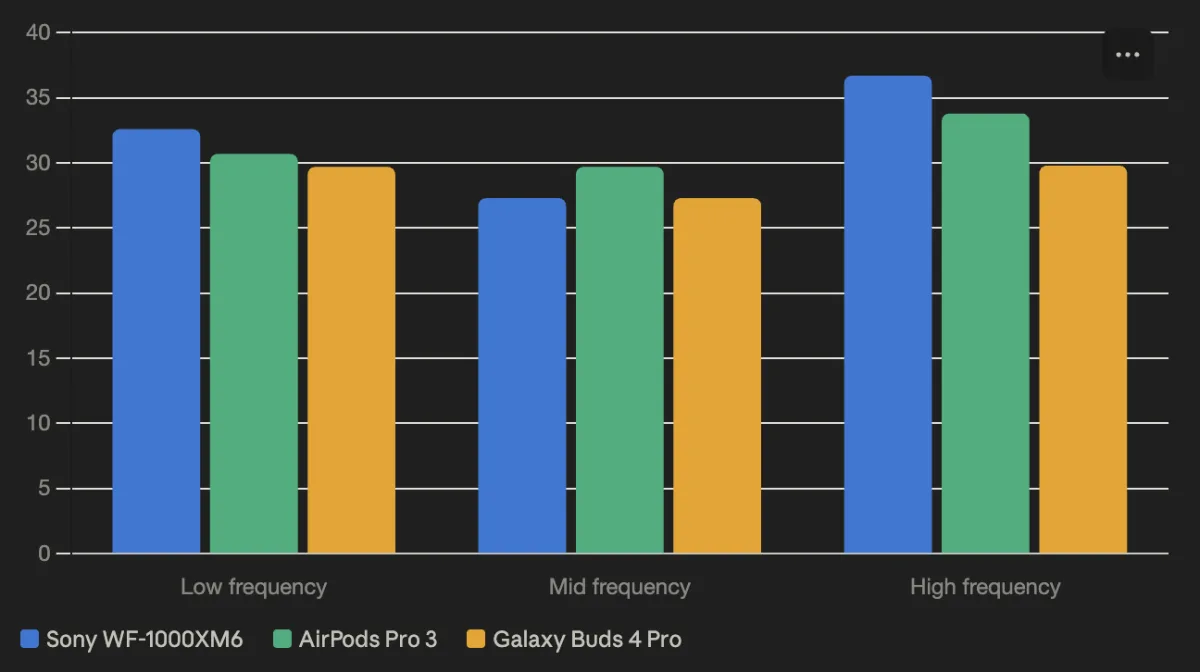
TechGearLab's 2026 frequency-response testing across 16 earbuds puts the numbers in stark relief:
| Earbud | Low frequency | Mid frequency | High frequency |
|---|---|---|---|
| Sony WF-1000XM6 | 32.6 | 27.3 | 36.7 |
| Apple AirPods Pro 3 | 30.7 | 29.7 | 33.8 |
| Samsung Galaxy Buds 4 Pro | 29.7 | 27.3 | 29.8 |
Sony leads in low and high response. AirPods Pro 3 leads in mid-range — the band most responsible for voice clarity. Galaxy Buds 4 Pro trails both on raw numbers but offers ecosystem features the other two simply cannot replicate on Samsung hardware. No single model wins every category, which is exactly why review sites disagree so often.
The variable most roundups underweight is ecosystem lock-in. A Galaxy owner who buys AirPods Pro 3 gets a perfectly competent Bluetooth earbud — and loses Galaxy AI, real-time interpreter mode, and one-tap switching between Samsung devices. An audiophile who picks Galaxy Buds 4 Pro over the Sony WF-1000XM6 trades measurable sound quality for ecosystem convenience. Neither choice is wrong, but each should be made on purpose.
SoundGuys sums this up neatly in its 2026 awards: Sony WF-1000XM6 is "best earbuds overall," AirPods Pro 3 is "best earbuds for iPhone," and Galaxy Buds 4 Pro is "best earbuds for Samsung." Three winners, three different contexts — which is also why this comparison sits inside our broader consumer electronics buyer's guide for 2026 if you're shopping for more than just earbuds this year.
How this comparison was put together
This guide is a research-based synthesis, not a hands-on lab test performed by our team — and we want to be upfront about that distinction before you read a word further. We pulled and cross-checked data from TechGearLab's lab-measured frequency response scores across 16 earbuds, SoundGuys' expert panel reviews (restructured for transparency as of March 31, 2026), Forbes Vetted's evaluation of more than 30 pairs, and editorial verdicts from Wirecutter, CNET, Mashable, and The Independent, plus long-form real-world video testing.
We weighed each earbud across seven dimensions: sound quality, active noise cancellation (ANC), call quality, battery life, comfort and fit, ecosystem integration, and value relative to price. No single metric crowns a winner — the weighting shifts depending on which user profile we're answering for.
One honest limitation: lab frequency measurements can't fully capture subjective listening preference or individual ear-canal shape. TechGearLab's sub-scores (the Sony WF-1000XM6 posts 8.5 for bass and 8.8 for mid-range) are useful relative benchmarks, but two people can hear the identical earbud very differently. Where lab data and subjective expert opinion diverge, we say so explicitly below.

Sony WF-1000XM6: the audiophile's pick with the strongest ANC
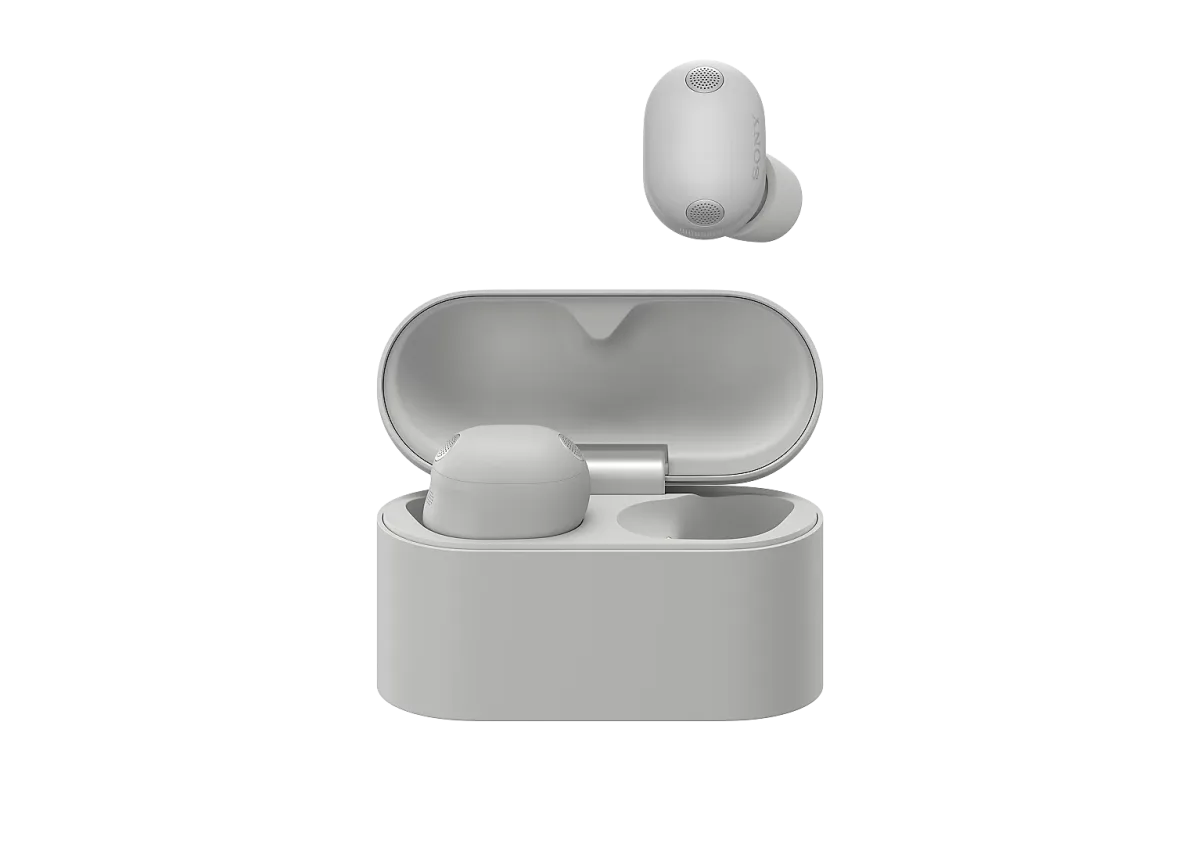
If raw sound quality and noise cancellation top your list, the Sony WF-1000XM6 is the clearest answer for 2026. It leads TechGearLab's lab testing with frequency scores of 32.6 (low), 27.3 (mid), and 36.7 (high) — the highest combined low- and high-band scores of all 16 earbuds tested. Sub-scores of 8.5 for bass and 8.8 for mid-range keep it in the top tier on every measured dimension.
SoundGuys names it "best earbuds overall," citing great sound quality, excellent ANC and isolation, a comfortable fit, and standout mic quality. Forbes Vetted calls it the best premium wireless earbud after testing over 30 pairs, and Mashable lists it among the four highest-quality wireless earbuds of 2026.
The ANC performance earns specific attention across sources. One reviewer who spent 60 days and several hundred dollars testing earbuds across flights, coffee shops, gym sessions, and work calls ranked the WF-1000XM6 first overall, citing its noise cancellation in aircraft-cabin-level noise as a key differentiator (source).
Where it falls short: the WF-1000XM6 is platform-agnostic, working equally well on iOS and Android — but that universality means no deep ecosystem perks on either platform. You won't get Hearing Aid mode on iPhone or Galaxy AI on Samsung, and it carries the highest price tag of the three. For a casual listener who mostly wants background music on a commute, that premium is hard to justify.
Who should buy it: listeners who prioritize measurable sound quality over ecosystem features, frequent flyers who need the strongest available ANC, anyone who switches between iOS and Android, and users who take frequent calls and need reliable mic performance.
Apple AirPods Pro 3: the smartest buy inside the Apple ecosystem
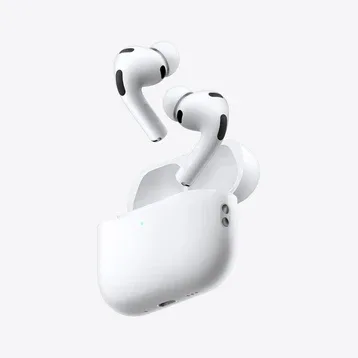
Raw lab scores undersell the AirPods Pro 3. Its TechGearLab frequency scores — 30.7 (low), 29.7 (mid), 33.8 (high) — trail the Sony WF-1000XM6 in every band, yet The Independent named it the best earbud on test overall, pointing specifically to audio quality, strong ANC, heart-rate monitoring, and live translation — features no competitor currently matches. That gap between lab score and real-world verdict comes down almost entirely to ecosystem integration.
For iPhone owners, the AirPods Pro 3 unlocks capabilities unavailable elsewhere. Its FDA-cleared Hearing Aid feature, built into the earbud firmware, turns the Pro 3 into a clinical-grade hearing-assistance device for mild to moderate hearing loss. Live Translation works without a phone connection. Switching between iPhone, Apple Watch, iPad, and Mac happens automatically with no manual pairing. These are daily-use features, not software gimmicks.
Wirecutter notes that low-frequency noise reduction is discernibly improved over the AirPods Pro 2, now reaching parity with the previous-generation Sony WF-1000XM5 — a meaningful narrowing of the ANC gap with Sony. SoundGuys names it "best earbuds for iPhone," and it carries a lower MSRP than the WF-1000XM6, sharpening the value case for anyone who will actually use the ecosystem features.
The honest weakness: outside Apple's ecosystem, the AirPods Pro 3 is a competent but unremarkable Bluetooth earbud. Android users get basic playback with limited controls — Hearing Aid mode, Live Translation, and automatic switching all require Apple hardware.
Who should buy it: iPhone users who want the deepest integration with their Apple devices, anyone who'd benefit from the FDA-cleared Hearing Aid feature, people who move between iPhone, Mac, and iPad daily, and buyers who want strong ANC and call quality at a lower price than the Sony WF-1000XM6.
Samsung Galaxy Buds 4 Pro: the logical pick for Android and Samsung users
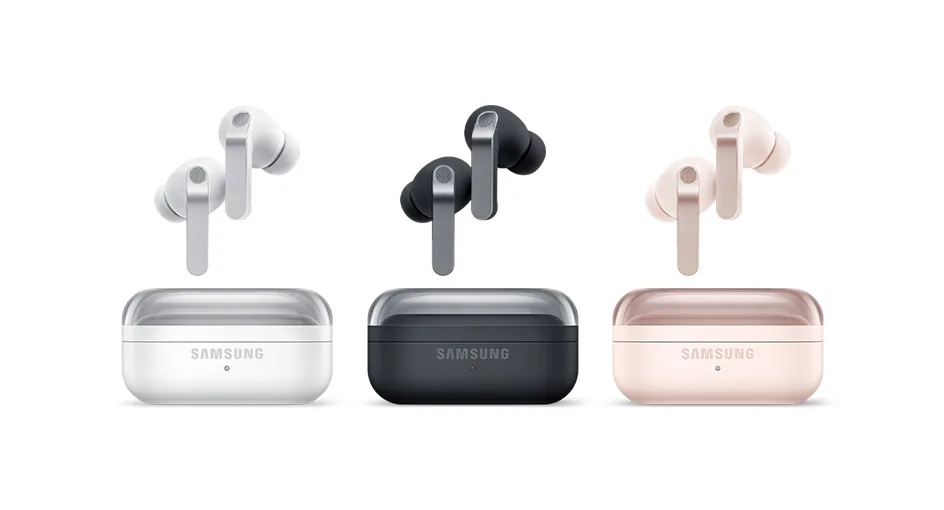
The Galaxy Buds 4 Pro occupies a well-defined niche: best wireless earbud for Samsung Galaxy owners, and a strong contender for Android users in general. SoundGuys names it "best earbuds for Samsung," Forbes Vetted calls it "best wireless earbuds for Samsung users," and CNET calls it "easy to recommend to Android users in general."
Its TechGearLab frequency scores — 29.7 (low), 27.3 (mid), 29.8 (high) — trail both rivals in raw measurement, but the generational jump over the Galaxy Buds 3 Pro (26.2 low, 26.8 mid, 24.8 high) is significant across every band.
Galaxy AI integration is what justifies the choice for Samsung owners: real-time translation through the earbuds, interpreter mode for face-to-face conversations, and adaptive sound controls tied to One UI. It's the same hardware-software playbook Apple runs with AirPods, just on Samsung's side of the fence. It's also priced between the AirPods Pro 3 and the Sony WF-1000XM6.
The limitation mirrors the AirPods Pro 3's: outside Samsung devices, Galaxy AI features disappear. A non-Samsung Android user gets solid ANC and good sound but misses the features that set it apart — for that buyer, the Sony WF-1000XM6 offers stronger raw audio at a comparable price.
Who should buy it: Samsung Galaxy owners who want the same ecosystem tightness AirPods give iPhone users, Android users who prioritize Galaxy AI's real-time translation and interpreter mode, and anyone upgrading from the Galaxy Buds 3 Pro for measurable across-the-board gains.
Head-to-head: sound, ANC, calls, codecs, and comfort
Sound quality. Sony leads lab-measured frequency response in the low and high bands. AirPods Pro 3 leads mid-range (29.7 vs. 27.3 for both rivals), which translates to stronger voice clarity for podcasts and calls. Galaxy Buds 4 Pro is competitive but trails both in raw scores.
Active noise cancellation. Sony WF-1000XM6 holds the top ANC position across multiple independent sources. AirPods Pro 3 has closed much of the gap versus its predecessor, now matching the older Sony WF-1000XM5 in low-frequency reduction. Galaxy Buds 4 Pro delivers solid, Galaxy-AI-adaptive ANC but doesn't match Sony's outright blocking power.
Call quality. SoundGuys specifically calls out the WF-1000XM6's mic quality. AirPods Pro 3 benefits from Apple's beamforming mic array, which excels in noisy environments on iPhone. Galaxy Buds 4 Pro is competitive for calls on Samsung devices, where voice processing is optimized through One UI.
Codec support. The WF-1000XM6 supports LDAC for high-resolution audio on compatible Android phones. AirPods Pro 3 runs Apple's AAC pipeline, tightly optimized for iOS but limited on Android. Galaxy Buds 4 Pro uses Samsung's Scalable Codec for adaptive bitrate audio on Samsung hardware.
Comfort and fit. All three earn positive comfort marks from their respective reviewers, but individual ear-canal shape remains the biggest variable no lab score can predict. If you can, test fit in person before buying.
Two challengers worth a look
The three-way comparison dominates 2026 coverage, but two other earbuds deserve a mention. The Bose QuietComfort Ultra Earbuds (2nd Gen) earns "best noise-canceling wireless earbuds" from Forbes Vetted and posts strong TechGearLab sub-scores — 8.7 for bass, 9.0 for treble — matching or beating the Sony WF-1000XM6 in those specific categories.
The Technics EAH-AZ100 is SoundGuys' pick for "best earbuds for Android" — a distinct designation from "best for Samsung." It supports LDAC, offers strong ANC and passthrough mode, and undercuts the Sony WF-1000XM6's street price, making it worth a look for non-Samsung Android users chasing high-resolution audio. If you're weighing earbuds against a pair of full-size headphones for the same money, our over-ear, on-ear, and noise-canceling headphones guide lays out that trade-off in more detail.
Final recommendation: a simple decision framework
- You live in the Apple ecosystem (iPhone, Mac, iPad, Apple Watch): buy the AirPods Pro 3. The Hearing Aid feature, Live Translation, automatic device switching, and optimized AAC pipeline deliver value no competitor matches inside that ecosystem — at a lower price than the Sony WF-1000XM6.
- You own a Samsung Galaxy phone: buy the Galaxy Buds 4 Pro. Galaxy AI integration and seamless One UI pairing outweigh its lower raw lab scores for this specific buyer.
- You want the best measurable sound and ANC regardless of phone, or you switch between iOS and Android: buy the Sony WF-1000XM6. It's the most expensive of the three, but it's also the only one with no ecosystem strings attached.
Whichever earbuds you land on, they're rarely the only tech purchase on the list this year. If you're also weighing a new tablet, an e-reader, a second monitor, or a portable charger for travel, our companion guides below cover those categories with the same lab-data-plus-expert-review approach used here.
Frequently asked questions
Do AirPods Pro 3 work well with Android phones? Yes, for basic playback and calls, but you lose the features that make them worth the price for iPhone owners — Hearing Aid mode, Live Translation, and automatic device switching all require Apple hardware.
Is the Sony WF-1000XM6 worth the extra cost over AirPods Pro 3 or Galaxy Buds 4 Pro? If sound quality and ANC are your top priorities and you don't need ecosystem-specific features, yes — it posts the highest combined frequency scores of the three in independent lab testing. If you're deep in the Apple or Samsung ecosystem, the ecosystem features on the other two may matter more than the lab-score gap.
Which of these three has the best microphone for calls? SoundGuys specifically flags the Sony WF-1000XM6's mic quality as a standout. AirPods Pro 3 is close behind thanks to Apple's beamforming array on iPhone, and Galaxy Buds 4 Pro performs well for calls specifically on Samsung devices.
This article was researched and drafted with AI assistance, then reviewed and fact-checked by a human before publishing. It is research-based — we synthesize manufacturer specs, independent lab tests, and verified buyer reviews, and we cite our sources. We don't accept payment for rankings. How we review · How we use AI
Affiliate disclosure: As an Amazon Associate, Grounded Pick earns from qualifying purchases. We may also earn a commission from other affiliate programs when you click a link and make a purchase, at no extra cost to you. Editorial recommendations are completed before any affiliate link is applied. Full disclosure.
Discussion
No comments yet. Be the first to share your thoughts.