
This guide is based on manufacturer specifications, independent lab testing data, verified expert sources, and aggregated buyer feedback. It does not reflect hands-on testing by Grounded Pick. Researched and drafted with AI assistance, reviewed and fact-checked by our editorial team before publishing.
We may earn a commission when you use our links to make a purchase — at no extra cost to you. Our editorial recommendations are finalized before any affiliate link is applied. Read our full disclosure →
TL;DR — The Framework That Changes Every Decision
Most outdoor gear buying mistakes come down to one thing: buying technical-grade equipment for lifestyle use, or lifestyle gear for technical conditions. Before you spend a dollar, answer three questions:
- How often will you actually use this? (Once a season, monthly, weekly?)
- What are the worst conditions you'll realistically face?
- What happens if the gear fails — minor discomfort, or real risk?
If your answers are "rarely," "light rain on maintained trails," and "discomfort" — you want lifestyle gear. If any answer is "frequently," "sustained backcountry conditions," or "real risk" — invest in technical specs.
Everything in this guide flows from that framework.
How the 2026 Outdoor Gear Market Has Changed — And Why It Affects What You Buy
The outdoor market isn't what it was five years ago. Three forces are reshaping what gets sold, at what price, and to whom — and understanding them will save you money.
Premiumization is accelerating. According to Intel Market Research's outdoor gear analysis, camping gear is the fastest-growing segment specifically because of innovation in lightweight materials and smart technology integration. That's legitimately useful for serious backcountry users. For car campers, it mostly means you're being shown expensive gear built for conditions you'll never encounter.
The lifestyle crossover is real. ISPO's Spring–Summer 2026 order trends report notes that running has become "the new streetwear," pulling urban buyers into performance footwear for commuting and campus life. Brands like Hoka, Asics, and Merrell are posting strong results partly because of this shift. The practical implication: a large portion of gear marketed as "outdoor" is designed primarily for urban use. That's not a problem — unless you assume it will perform in serious backcountry conditions.
Sustainability is going mainstream. Technavio's outdoor sports apparel forecast projects the market to grow by $2.51 billion at a 4.7% CAGR through 2030, with sustainability cited alongside performance as a key driver. Recycled materials, PFAS-free DWR treatments, and bio-based insulations are appearing across price tiers — not just premium lines. Patagonia's Capilene line uses recycled polyester; Icebreaker uses ZQ-certified merino. These are genuine improvements, not just marketing language.
The total market sits at approximately $38.2 billion in 2026, up from $36.5 billion in 2025, with a projected 5.9% CAGR through 2035, according to GM Insights' recreational and outdoor products report. More brands, more price tiers, more category overlap. The result is a market that serves everyone from alpine mountaineers to urban commuters — and one where it's genuinely easy to buy the wrong thing.
Technical Gear vs. Lifestyle Gear: The Comparison That Changes How You Shop
Before you evaluate any specific product, the most important question is honest self-assessment: what will you actually do with this gear?
Technical gear is purpose-built for specific conditions. It carries rated performance specifications — waterproof ratings in millimeters of hydrostatic head, temperature ratings tested to EN/ISO standards, weight-to-function ratios engineered for load-carrying efficiency. A fully seam-taped hardshell jacket, a four-season mountaineering tent, a 15°F sleeping bag: these are technical products. They cost more because the engineering is real, and the consequences of failure in the conditions they're designed for are serious.
Lifestyle gear is built for versatility, comfort, and urban-to-trail crossover. A water-resistant softshell you wear to work and on weekend hikes, a three-season tent for car camping, a trail running shoe worn as a daily sneaker — these are lifestyle products. Not inferior. Just built for a different use case.
Boardsport SOURCE's S/S 2026 Retail Buyer's Guide notes that art studios, patios, and urban spaces have become as relevant as alpine campsites for gear design. That's a real market shift — and it's produced a generation of products that blur the line between technical and lifestyle. Valuates Reports data confirms that outdoor jackets, shoes, fleece layers, and backpacks are increasingly used for commuting, campus life, and casual fitness — not just expeditions.
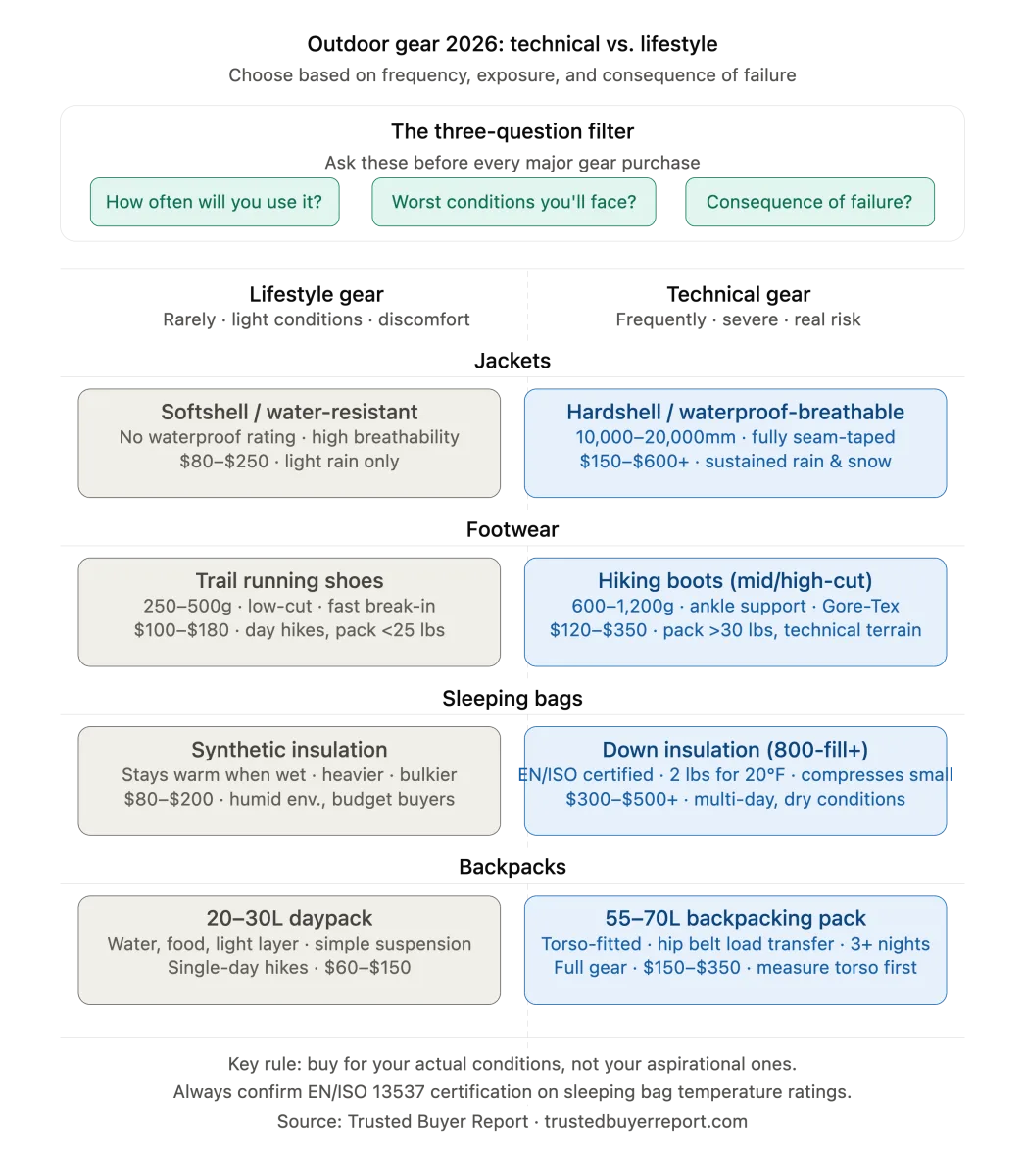
Use this three-question filter before any major gear purchase:
- Frequency: Will you use this gear once a season, monthly, or weekly?
- Exposure: What are the worst conditions you'll realistically face — light rain on a maintained trail, or sustained wind and snow above treeline?
- Consequence of failure: If this gear fails, are you mildly uncomfortable or genuinely at risk?
Rarely + light conditions + discomfort → lifestyle gear is the right call and the smarter value.
Frequently + severe conditions + real risk → invest in technical specs.
Outdoor Apparel in 2026: What to Look for in Jackets, Base Layers, and Pants
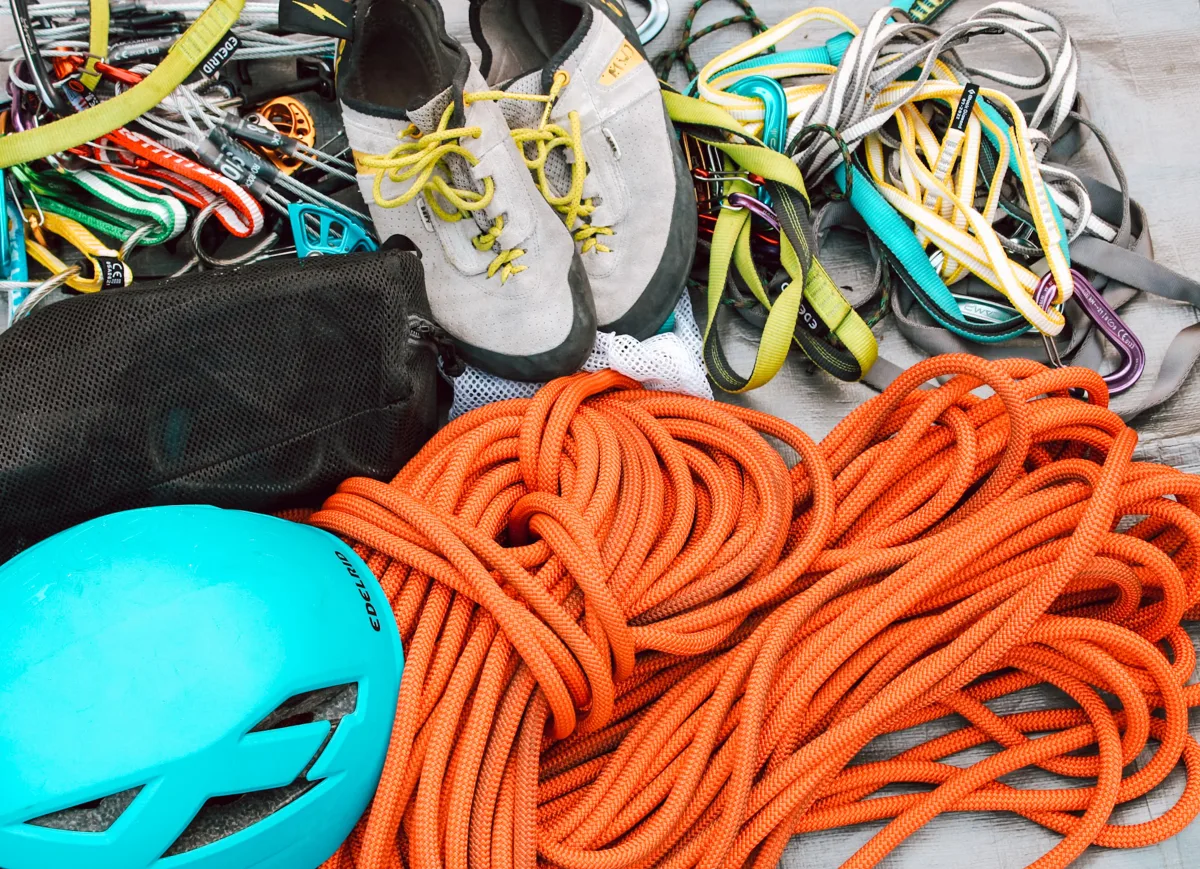
Apparel is the largest and most confusing segment. The three-layer system — base layer, mid layer, outer layer — is the right framework, but most people don't need all three layers for most activities.
What Specs Actually Matter in Jackets
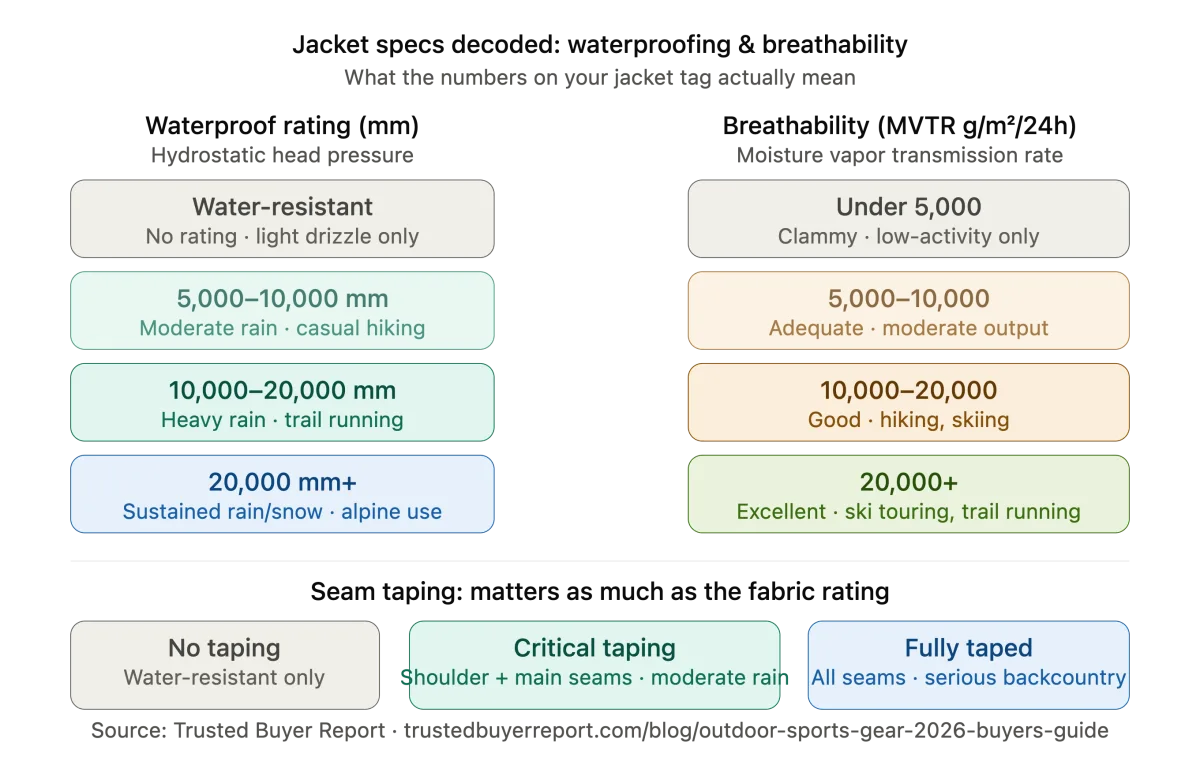
Two numbers matter for jackets, and two numbers only: waterproof rating and breathability rating.
Waterproof rating is measured in millimeters of hydrostatic head — the height of a water column the fabric can resist before leaking. A rating of 10,000mm handles moderate rain adequately. 20,000mm handles sustained heavy rain and snowmelt. Anything marketed only as "water-resistant" has no standardized rating and is not waterproof — it handles light drizzle and that's it.
Breathability is measured as MVTR (moisture vapor transmission rate): how much moisture vapor passes through per square meter per 24 hours. A rating of 10,000g/m²/24h is adequate for moderate activity. 20,000g+ is appropriate for high-output activities like ski touring or trail running in rain. Budget jackets routinely sacrifice breathability for waterproofing — you stay dry from rain but get soaked in sweat.
Seam taping matters as much as fabric rating:
- Fully taped seams (every seam covered) — appropriate for sustained wet conditions and serious backcountry use.
- Critically taped seams (shoulder and main seams only) — adequate for moderate rain.
- No taping — water-resistant only; fine for light drizzle, not for sustained precipitation.
According to Crobox's outdoor apparel industry analysis, consumers consistently rank breathability and comfort as top purchase drivers — above waterproofing — reflecting real frustration with older waterproof fabrics that trapped moisture. Modern laminates like Gore-Tex Pro, eVent, and Polartec Neoshell have largely solved this for mid-range and premium jackets. If you're buying under $150, test the breathability claim carefully — that's where most manufacturers cut corners.
Hardshell vs. Softshell: Which Do You Need?
| Hardshell | Softshell | |
|---|---|---|
| Waterproofing | Fully waterproof (10,000–20,000mm+) | Water-resistant only (no rating) |
| Breathability | Moderate to high (varies by laminate) | High |
| Weight | Moderate (lighter in ultralight versions) | Light to moderate |
| Packability | Very packable | Moderate |
| Best for | Sustained rain/snow, alpine, ski touring | High-output activity in dry-to-light-rain conditions |
| Price range | $150–$600+ | $80–$250 |
Choose a hardshell if your activity involves sustained precipitation, cold temperatures, or alpine conditions. Choose a softshell if you run warm, move fast, and face only occasional light rain.
Base Layers: Merino Wool vs. Synthetic
The merino vs. synthetic debate has a clear use-case answer:
Merino wool regulates temperature across a wider range, resists odor for multi-day use without washing, and feels comfortable against skin. It dries more slowly and costs more — a quality merino base layer runs $80–$150. Best for multi-day backpacking where laundry frequency and odor control matter.
Synthetic (polyester, nylon) dries faster, costs less ($30–$80), and handles repeated washing better. Best for single-day activities where you'll wash the layer after each use.
Mid-range brands have closed the quality gap considerably. REI Co-op and Smartwool now offer quality merino at price points that used to be reserved for Patagonia and Icebreaker.
Pants: What "Versatile" Actually Means in 2026
Boardsport SOURCE's S/S 2026 analysis calls out the "one pair of pants that does it all" trend, with brands like Duer offering slim and relaxed silhouettes that cross outdoor, action sports, and urban wardrobes. For casual outdoor users, this is genuinely useful. For technical use, what matters is articulated knees, stretch fabric construction, and a light DWR treatment — not silhouette. Softshell pants with 4-way stretch and a DWR finish handle 90% of hiking and climbing scenarios without the bulk and noise of hardshell pants.
Footwear Breakdown: Hiking Boots vs. Trail Running Shoes — Which Is Right for You?
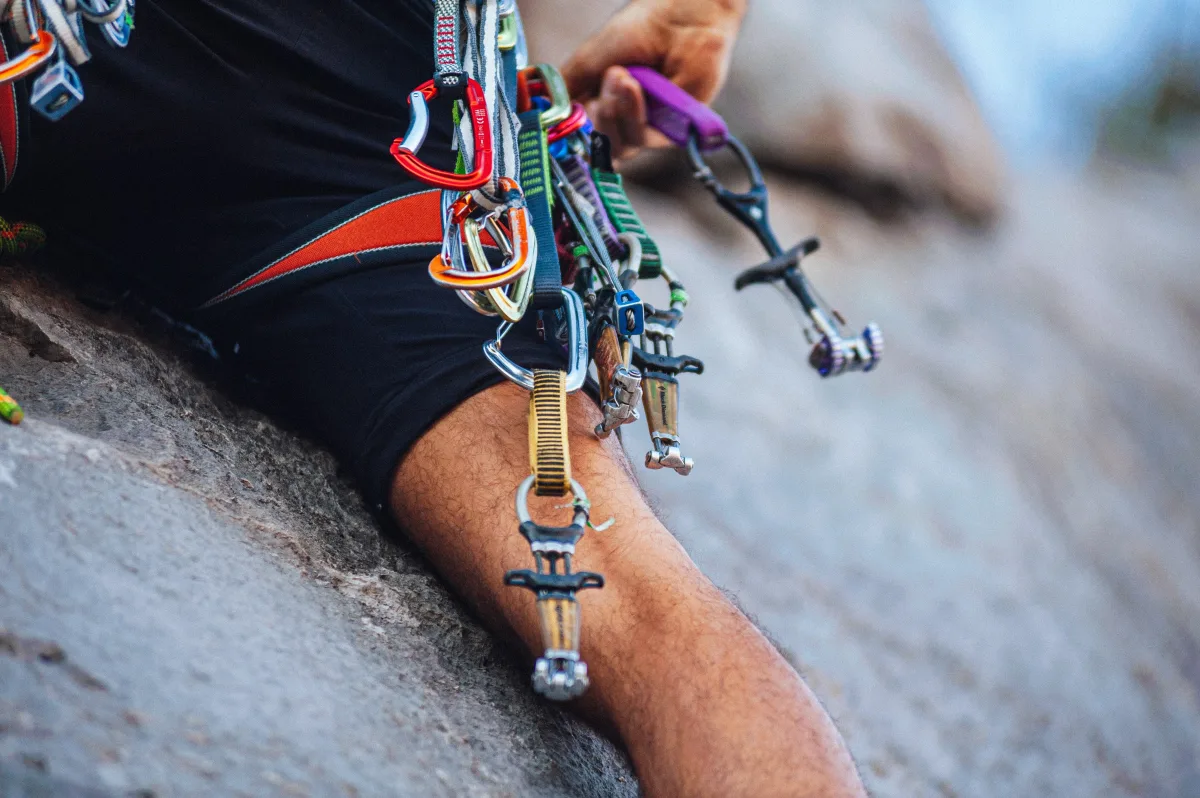
This is one of the most genuinely contested decisions in outdoor gear. The right answer depends entirely on your specific use case.
| Factor | Hiking Boots | Trail Running Shoes |
|---|---|---|
| Weight | Heavy (600g–1,200g/pair) | Light (250g–500g/pair) |
| Ankle support | High (mid or high-cut) | Low (low-cut only) |
| Break-in time | Significant (full-grain leather) | Minimal to none |
| Waterproofing | Often standard (Gore-Tex) | Optional (some models) |
| Best use case | Heavy pack, technical terrain, cold/wet | Day hikes, fast-and-light, warm/dry |
| Typical price | $120–$350 | $100–$180 |
Choose hiking boots if you're carrying a pack over 30 lbs, navigating technical rocky terrain, dealing with cold and wet conditions, or have a history of ankle instability. The Salomon Quest 4 GTX (~$200) and Merrell Moab 3 Mid GTX (~$140) are reliable mid-range options with genuine waterproofing and ankle support.
Choose trail runners for day hikes on maintained trails, fast-and-light backpacking with packs under 25 lbs, warm and dry conditions, or if you're an experienced hiker with strong ankles. The Hoka Speedgoat 5 (~$155) and Salomon Speedcross 6 (~$130) are consistently strong performers.
One note from ISPO's 2026 order trends data: brands like Hoka and Merrell are posting strong quarterly figures partly because trail running shoes have crossed into urban lifestyle wear. That means you're competing with fashion buyers for stock, and popular colorways sell out before technical variants. Buy technical colorways early if you need specific lug patterns or Gore-Tex versions.
The Middle Category Worth Knowing About
Cognitive Market Research's outdoor product report identifies approach shoes as an underappreciated middle category. Approach shoes are low-profile, sticky-rubber shoes designed for scrambling and climbing approaches — they fill the gap between trail runners and climbing shoes. The La Sportiva TX4 (~$150) handles technical terrain that would destroy a trail runner without the weight of a full boot. If you do any Via Ferrata, scrambling, or technical day hiking, they're worth knowing about.
Camping Gear in 2026: Tents, Sleeping Bags, and the Lightweight vs. Durable Trade-Off
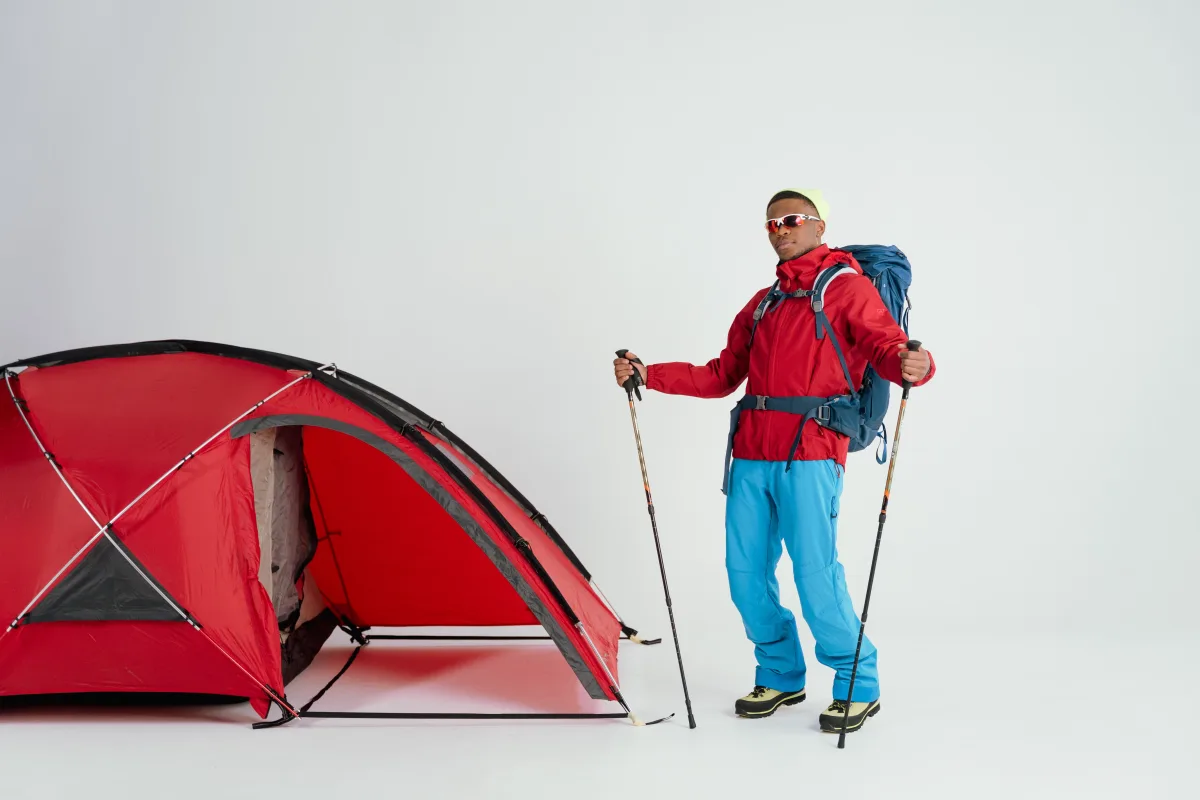
Camping gear is the most technically complex category and, according to Intel Market Research, the fastest-growing segment in the outdoor market due to lightweight material innovation. Most of that innovation matters to serious backpackers — not car campers.
Tents: Three-Season vs. Four-Season
This is the most important tent decision, and most buyers get it right by thinking clearly about the conditions they'll actually face.
Three-season tents handle rain, wind up to roughly 40 mph, and temperatures above freezing. They're lighter ($150–$400), pack smaller, and are appropriate for 95% of recreational camping in the US.
Four-season tents handle sustained snow loads, winds above 60 mph, and sub-zero temperatures. They're heavier, more expensive ($400–$800+), and necessary only for winter mountaineering or expedition use. If you're camping in a developed campground or on established trails below treeline in three seasons, you do not need a four-season tent.
Pole material matters for backpacking:
- Aluminum poles (DAC or Easton) — the performance standard for backpacking tents. Light, strong, repairable in the field.
- Fiberglass poles — heavier and can shatter in cold. Acceptable for car camping only.
- Carbon fiber poles — lightest option, found in ultralight tents like the Big Agnes Copper Spur HV UL2 (~$480). Expensive and less field-repairable; worth it only for serious ultralight backpackers.
Sleeping Bags: The Temperature Rating Problem
This is where most buyers get misled. Temperature ratings are only meaningful when they follow EN/ISO 13537 testing standards. A bag rated to 20°F under EN/ISO testing will actually perform to that temperature for a "comfort" sleeper. Bags without this certification use manufacturer ratings that are often optimistic by 10–15°F. Always confirm EN/ISO certification before trusting a temperature rating.
Down insulation (800-fill power and above) compresses smaller and weighs less than synthetic at equivalent temperature ratings. A 20°F down bag might weigh 2 lbs and compress to the size of a Nalgene bottle. The Western Mountaineering Alpinlite (~$485) is the benchmark for high-performance down. The trade-off: down loses insulating value when wet.
Synthetic bags — like the Marmot Trestles 15 (~$160) — maintain warmth when damp and cost significantly less. The smarter choice for humid environments, shoulder-season camping with wet conditions, or budget-conscious buyers.
GM Insights notes that brands are investing in modular gear systems and multifunctional equipment. Quilt systems — open-backed sleeping bags that pair with sleeping pads — are a practical example. They're lighter than traditional bags but require a specific sleeping style and a well-insulated sleeping pad to avoid cold coming from below.
The Sleeping Pad Mistake Most Buyers Make
Sleeping pads are chronically underestimated. A $500 down sleeping bag loses most of its insulation value if you're sleeping on cold ground without an adequate pad — the insulation compresses beneath you and stops working. R-value is the insulation rating: R-2 is adequate for summer camping, R-4+ for three-season use, R-5+ for winter. If you're buying a sleeping bag, buy the sleeping pad at the same time and make sure the combined system covers the coldest conditions you'll face.
Backpacks: Fit and Capacity Are All That Matter
Most buyers choose a backpack based on brand reputation or feature count. Both are the wrong criteria. Fit and capacity determine whether a pack is comfortable and functional — everything else is secondary.
How to Actually Size a Backpack
Torso length, not overall height, determines backpack fit. Most brands offer small, medium, and large torso fits, and brands like Osprey and Gregory offer gender-specific fit systems. Measure your torso length from the C7 vertebra (the bony bump at the base of your neck) to the top of your hip bones. Buying a pack without knowing your torso length is the single most common backpack purchasing mistake — and it's one that no amount of hip belt adjustment can fix.
Capacity Guidelines That Hold Up in Practice
| Trip type | Capacity | Notes |
|---|---|---|
| Single-day hike | 20–30L | Water, food, a light layer |
| 1–2 nights | 35–50L | Shelter, sleeping system, clothes |
| 3+ nights | 55–70L | Full gear including bear canister if required |
The most common mistake is buying a 65L pack for a two-night trip. You'll overpack to fill it, carry unnecessary weight, and find the pack fits poorly when it's not fully loaded. Buy the pack that matches your actual trip length, not the one that feels most capable.
Hip Belt vs. Shoulder Straps — Where the Load Goes
For packs carrying more than 20 lbs, the hip belt load transfer system is the most important comfort factor. A properly fitted hip belt transfers 70–80% of pack weight to your hips and legs — the strongest muscle groups — rather than your shoulders and neck. If a pack's hip belt sits below your iliac crest, the load transfer doesn't work. This is why fit matters more than any feature: a technically excellent suspension system on a pack that doesn't fit your torso is useless.
Materials in 2026: What Sustainability Claims Actually Mean
Recycled and sustainable materials have moved from niche to mainstream in outdoor gear. Here's how to read the claims:
Recycled polyester (rPET) is made from post-consumer plastic bottles. It performs identically to virgin polyester and carries a lower carbon footprint. Most major brands now use rPET in base layers and insulation — it's a meaningful improvement.
PFAS-free DWR is more significant than it appears. Traditional durable water-repellent coatings used PFAS (per- and polyfluoroalkyl substances) — chemicals that persist in the environment indefinitely. As of 2026, most leading brands have transitioned to PFAS-free alternatives. Performance is comparable to traditional DWR in moderate conditions; heavy sustained rain may require reapplication more frequently. Check whether a jacket's DWR is PFAS-free — it should be clearly labeled.
Down certifications matter if ethics are a concern. The Responsible Down Standard (RDS) and Global Traceable Down Standard (Global TDS) certify that down was sourced without live plucking or force feeding. Look for RDS or Global TDS marks rather than generic "ethically sourced" claims.
Bio-based insulations — including Primaloft Bio, which partially biodegrades at end of life — are appearing in mid-range jackets and sleeping bags. Performance is comparable to standard synthetic insulation; the environmental benefit comes at end of product life, not during use.
Gear Maintenance: The Part Every Guide Skips
Technical gear doesn't maintain its performance ratings indefinitely. DWR coatings degrade with washing and use. Down insulation clumps when contaminated with body oils. Waterproof membranes lose their function when DWR fails and the outer fabric wets out. Maintaining your gear correctly extends both its life and its rated performance.
- Re-treat DWR after 5–10 washes or whenever water beads stop forming on the outer fabric. Nikwax TX.Direct and Grangers Clothing Repel are the two most widely recommended spray-on treatments.
- Wash down gear in a front-loading machine (top-loaders with agitators can destroy baffles) with down-specific detergent (Nikwax Down Wash or similar). Tumble dry low with tennis balls to redistribute fill.
- Store sleeping bags loosely, not compressed in their stuff sacks — long-term compression permanently reduces fill power and temperature rating.
- Inspect tent poles and seams after every trip. Re-seam-seal with an appropriate sealant (Seam Grip or similar) if you notice separation — a failed seam costs $5 to fix and $300+ to replace if the tent is destroyed.
Where to Buy Outdoor Gear in 2026: A Short Guide to the Main Retailers
The three dominant retailers for outdoor gear in the US are REI, Dick's Sporting Goods, and the brands' own direct-to-consumer channels. They serve meaningfully different buyer profiles:
REI Co-op (store review →) is the best general-purpose outdoor gear retailer in the US. The 365-day return policy, knowledgeable staff, and member dividend (10% annual rebate for co-op members) provide genuine value for frequent outdoor buyers. Their house brand (REI Co-op) offers reliable mid-range gear at strong prices.
Dick's Sporting Goods (store review →) is the better choice for mainstream sports, fitness equipment, and casual outdoor gear at competitive prices. Selection in technical outdoor is more limited than REI, but they frequently run sales and offer a broad price range.
Brand direct (Patagonia, Arc'teryx, Salomon, Hoka) is worth checking for new releases, end-of-season sales, and warranty service. Some brands — particularly Patagonia — offer used/reconditioned gear programs that provide significant discounts on returned items.
For comparing prices across retailers and finding the best time to buy, Grounded Pick's Price Trend Analyzer tracks historical pricing for outdoor gear categories.
Who Should Buy What: Use-Case Recommendations
If you camp once or twice a year at developed campgrounds:
You need a three-season tent ($150–$300), a synthetic sleeping bag rated to 20–30°F, a 30L daypack, and trail running shoes or low-cut hikers. Don't let a gear shop upsell you to four-season or ultralight.
If you day hike on maintained trails monthly:
A mid-cut trail runner or light hiker, a 20–25L daypack, and a softshell jacket handle everything you'll encounter. A hardshell is worth adding if you're in the Pacific Northwest or routinely hike in sustained rain.
If you do multi-day backpacking regularly:
This is where technical specs earn their price. A down sleeping bag with EN/ISO certification, a three-season backpacking tent with aluminum poles, a 50–60L pack with a proper torso fit, and waterproof hiking boots appropriate for your terrain.
If you're building your first kit on a budget:
Start with fit, not features. A perfectly fitted mid-range pack from Osprey or Gregory outperforms an expensive pack that doesn't fit. A $160 EN/ISO-certified synthetic sleeping bag from Marmot is more useful than a $400 down bag with no certification. Get the basics right, then upgrade specific pieces based on what actually limits your comfort in the field.
Frequently Asked Questions
Is waterproof-breathable worth the premium over water-resistant?
For sustained rain and backcountry use, yes. Waterproof-breathable fabrics (Gore-Tex, eVent, similar laminates) are the only way to stay dry from both rain and sweat simultaneously in wet conditions. For casual use and light rain, a water-resistant softshell is significantly less expensive and usually sufficient. The question is how long and how hard you'll be out in the rain.
What's the minimum sleeping bag rating I actually need?
A common rule of thumb: buy a bag rated 10–15°F below the coldest temperature you expect to encounter. If the coldest night of your camping season is 35°F, a 20°F bag gives you adequate buffer. If you're car camping in summer, a 32–45°F bag covers most scenarios. Always confirm EN/ISO certification — uncertified ratings can be off by 10–15°F.
Are expensive trekking poles worth it?
For hikers covering significant elevation gain and descent, trekking poles reduce knee strain and improve balance on technical terrain. Carbon poles (lighter, more expensive) are worth it for long-distance hikers. Aluminum poles (heavier, cheaper, more durable) are the better value for most recreational hikers. Compact folding poles are more packable than flip-lock; either system works reliably when properly maintained.
When is a base layer worth buying vs. just a t-shirt?
Base layers earn their cost when temperature regulation matters — multi-day backpacking where you can't change clothes, high-output winter activities, or cold-wet conditions where staying dry next to skin is critical. For day hiking in mild conditions, a moisture-wicking athletic t-shirt does the same job at a fraction of the price.
Hiking boots vs. trail runners: does the answer change for beginners?
Somewhat. Beginners often have less developed ankle stability from hiking-specific terrain and may be carrying heavier packs than experienced hikers (more gear, more "just in case" items). For beginners on technical or uneven terrain, a mid-cut hiker or light boot provides meaningful stability margin. As you build trail-specific fitness and confidence, you can move to lighter footwear.
Reviewed by the Grounded Pick editorial team. This article was drafted with AI assistance and fact-checked by a human editor before publishing. Read our editorial standards → · Read our AI ethics policy →
Grounded Pick may earn a commission from purchases made through links on this page, at no extra cost to you. Affiliate links are added only after editorial assessment is complete. Full disclosure →
Discussion
No comments yet. Be the first to share your thoughts.